Part 4 of the series: The AI Visibility Gap
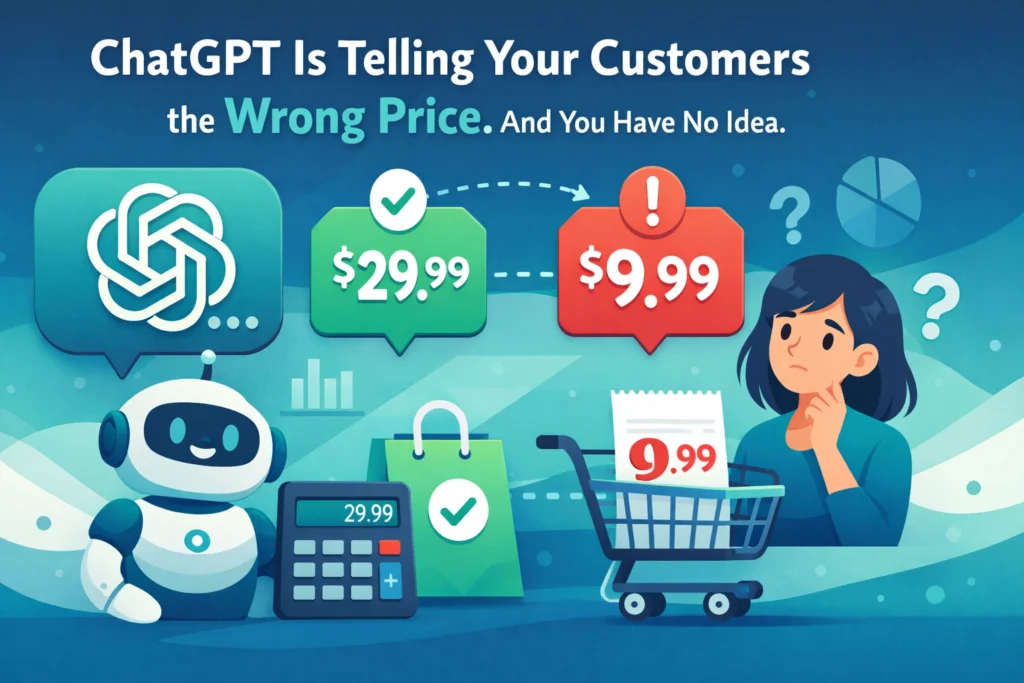
Last week, I asked ChatGPT a simple question: "How much does [a well-known SaaS product] cost?"
The answer was confident. Specific. Detailed. Three pricing tiers, dollar amounts, feature breakdowns.
And every single number was wrong.
Not outdated-by-a-month wrong. Wrong by hundreds of dollars. Wrong tiers. Wrong feature allocations. The kind of wrong that would send a prospect to a competitor's pricing page thinking they already knew the answer.
The company in question has no idea this is happening. They're tracking their Google rankings, monitoring their paid campaigns, optimizing their landing pages : and meanwhile, an AI assistant used by over 200 million people is confidently misinforming their potential customers dozens of times a day.
This is the accuracy problem. And almost nobody is paying attention to it.
AI Doesn't Tell You When It's Guessing
Here's what makes this different from a bad Google result. When Google shows outdated information, it's usually in a snippet pulled from an old page, and the user can click through to verify. There's a visible source. There's context.
When ChatGPT or Perplexity gives a wrong answer, it doesn't hedge. It doesn't say "I'm not sure about this." It presents fabricated information with the same confidence as verified facts. Researchers call these hallucinations. Your customers just call them answers.
And they act on them.
A prospect asking an AI assistant about your pricing, your service area, your product capabilities, or your company history is getting a response that feels authoritative. They have no reason to doubt it. Most of them won't double-check. They'll just form an impression and move on : either toward you or away from you, based on information you never approved and can't currently see.
The Types of Inaccuracies That Should Concern You
Not all AI hallucinations are created equal. Some are harmless : a slightly wrong founding date, a minor detail about your office location. But others directly impact revenue:
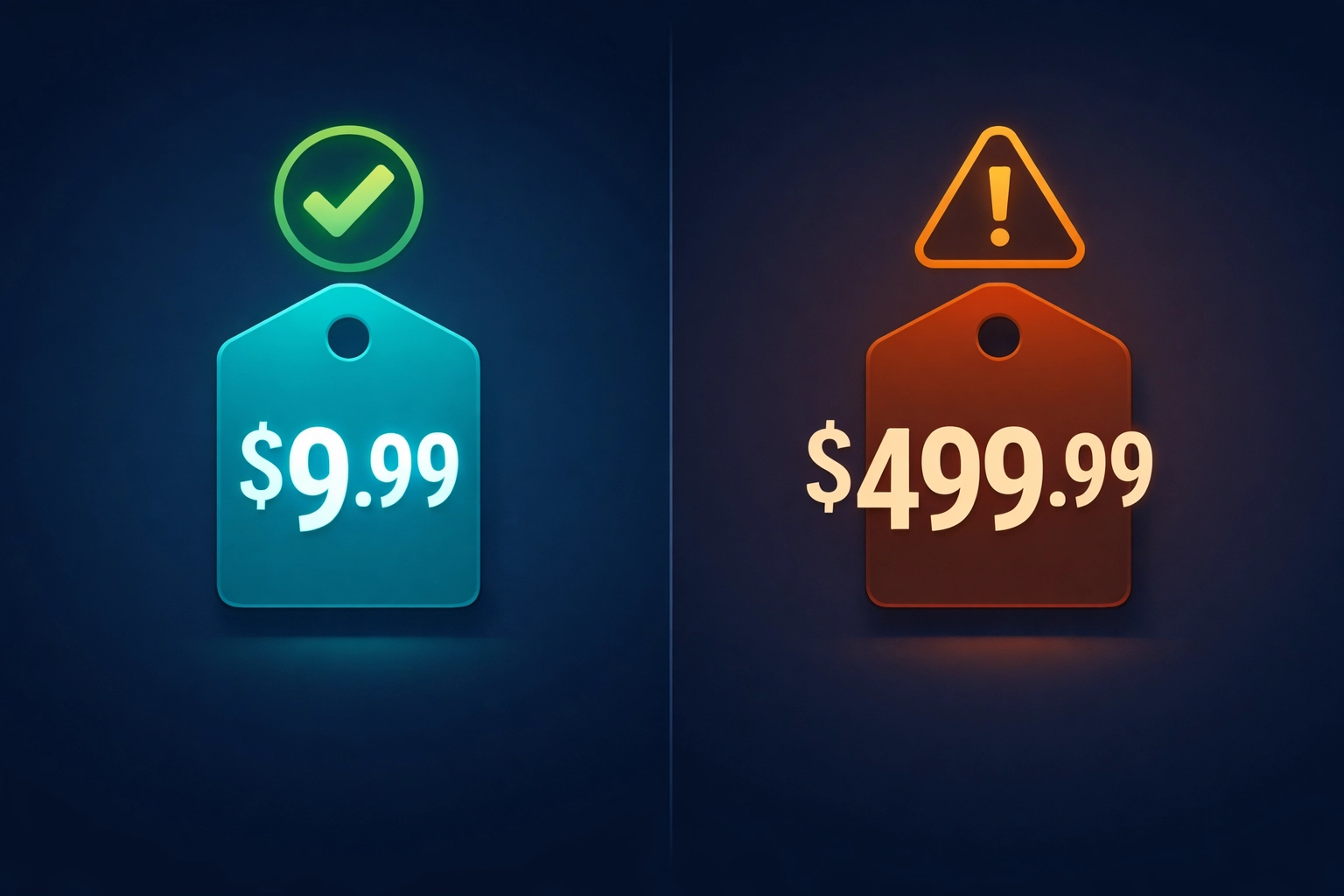
Pricing errors. AI platforms frequently state specific prices that are outdated, fabricated, or pulled from third-party comparison sites that were never accurate to begin with. If a prospect believes your product costs $499/month when it actually costs $199/month, you've lost them before they ever visit your site.
Feature misattribution. AI might claim your product does something it doesn't : or worse, claim it doesn't do something it does. "Unlike [your brand], this competitor offers real-time analytics" is devastating when you've had real-time analytics for two years.
Competitive mischaracterization. Sometimes AI gets your competitors right and you wrong. The prospect now has an accurate picture of your competitor and a distorted picture of you. That's not a fair fight.
Outdated positioning. If your company pivoted, rebranded, expanded into new markets, or discontinued a product line, AI models may still be working from old information. They don't update in real time. The training data has a lag. And even models with web access don't always fetch the latest version of your story.
This Isn't a Hypothetical Problem
The instinct for most marketers reading this is to think: "Sure, but how often does this actually happen?"
More than you'd expect. Studies from multiple research groups have found that large language models hallucinate at rates between 3% and 27% depending on the domain, the model, and the type of question. For factual business queries : pricing, features, company details : the error rates tend to be at the higher end, because this information changes frequently and isn't always well-represented in training data.
Now multiply that by volume. ChatGPT alone has over 200 million weekly active users. Perplexity processes millions of queries per day. Google's AI Overviews appear on a growing percentage of search results. When even a small fraction of those queries involve your brand, the number of people receiving inaccurate information about your business adds up fast.
And here's the part that should really get your attention: you have no analytics for this. Your Google Analytics doesn't track it. Your Search Console doesn't see it. Your CRM has no field for "prospect was misinformed by AI before they ever contacted us." It's a completely invisible channel producing real business impact.
What You Can Do About It Right Now
You don't need a tool to start understanding this problem. Open ChatGPT, Claude, or Perplexity right now and ask the questions your customers would ask about your business:
- "How much does [your product] cost?"
- "What does [your company] do?"
- "Is [your product] good for [your target use case]?"
- "Compare [your brand] vs. [top competitor]"
- "[Your brand] reviews"
Read the responses carefully. Not just whether you're mentioned, but whether what's said is accurate. Check the details. Check the numbers. Check the tone.
What you'll likely find is a mix: some things right, some things slightly off, some things completely fabricated. That mix is what your prospects are seeing every day.
Doing This Manually Doesn't Scale
That exercise is useful : once. But AI responses change as models get updated, new content gets indexed, and competitors adjust their strategies. What ChatGPT says about your brand today may be different next month. Checking manually every week across multiple platforms isn't realistic for most marketing teams.
A growing category of AI visibility tools has emerged to automate this. They systematically query AI platforms, track what's being said about your brand over time, and flag inaccuracies, sentiment shifts, and gaps in coverage.
CiteMetrix monitors six AI platforms with a composite scoring system, sentiment tracking, accuracy detection, and a remediation toolkit for fixing the problems it finds. You can see what AI says about your brand, track changes over time, and get specific recommendations for improving your AI visibility.
Other platforms worth evaluating include Profound (enterprise-focused with 10+ models), Otterly AI (lightweight monitoring for smaller teams), and Peec AI (citation tracking with sentiment analysis).
The category is new and evolving fast. The important thing isn't which tool you pick : it's that you start measuring what AI platforms are saying about your brand before your competitors do.
The Accuracy Gap Is a Strategic Vulnerability
Marketers have spent two decades learning to control their brand narrative across search, social, paid media, and PR. We've built entire disciplines around making sure the right message reaches the right person at the right time.
AI search is the first channel where we've completely lost that control : and most of us don't even know it yet.
The brands that figure this out early will have a significant advantage. Not because they'll game the system, but because they'll be the first to even know what the system is saying about them. You can't fix what you can't see.
And right now, almost nobody is looking.
Ready to see what AI platforms are saying about your brand? Get your ModelScore and start tracking your AI visibility → citemetrix.com
Eric Richmond is the founder of Expert SEO Consulting and has spent 20+ years helping brands navigate changes in how people find information online. He writes about the intersection of AI, search, and brand visibility.