Part 1 of The AI Visibility Gap series
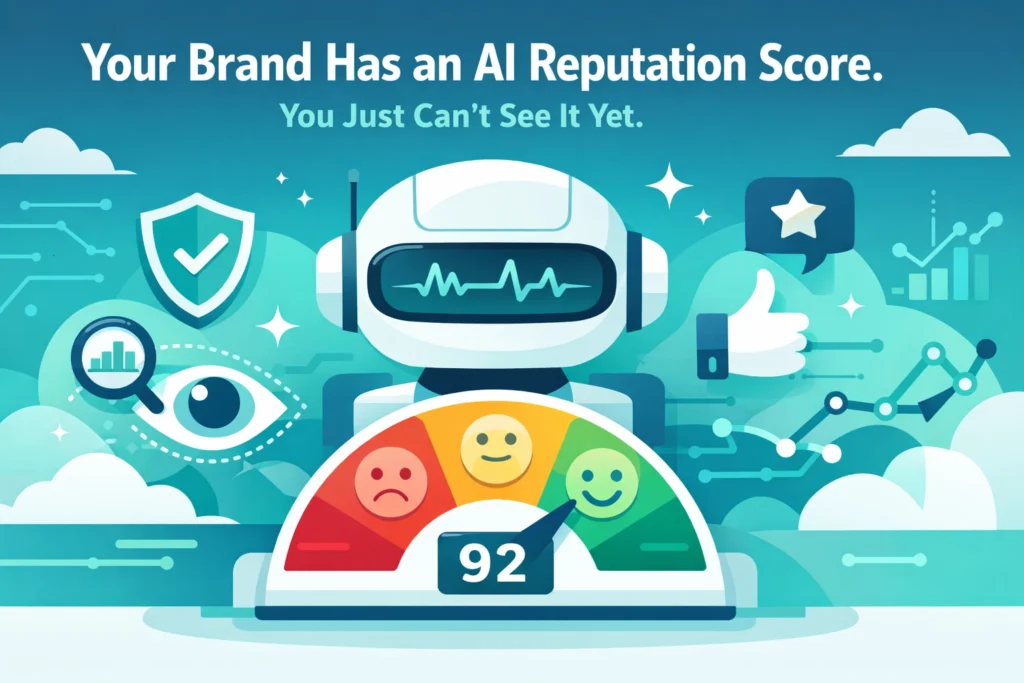
Your brand has a credit score you've never seen.
Not the financial kind. This one measures something different: how visible, how trusted, and how recommended your brand is across the AI platforms that are increasingly shaping how people discover and evaluate businesses.
Every time someone asks ChatGPT for a product recommendation, or asks Perplexity to compare options, or gets an AI Overview in Google search results, the AI makes a decision about your brand. Mention it or don't. Recommend it or skip it. Describe it positively or hedge with qualifiers. These decisions aren't random: they're based on patterns in the data the model has absorbed about you.
The sum of all those patterns is, effectively, a score. You just don't have a number for it yet.
The metric that doesn't exist (but should)
Marketers live and die by metrics. Domain Authority tells you how Google's algorithm perceives your site's credibility. Net Promoter Score tells you how your customers feel about you. Share of Voice tells you how much of the conversation in your category belongs to you.
But there is no widely adopted metric that captures how AI platforms perceive your brand. And that's a problem, because AI is rapidly becoming one of the most influential channels for brand discovery.
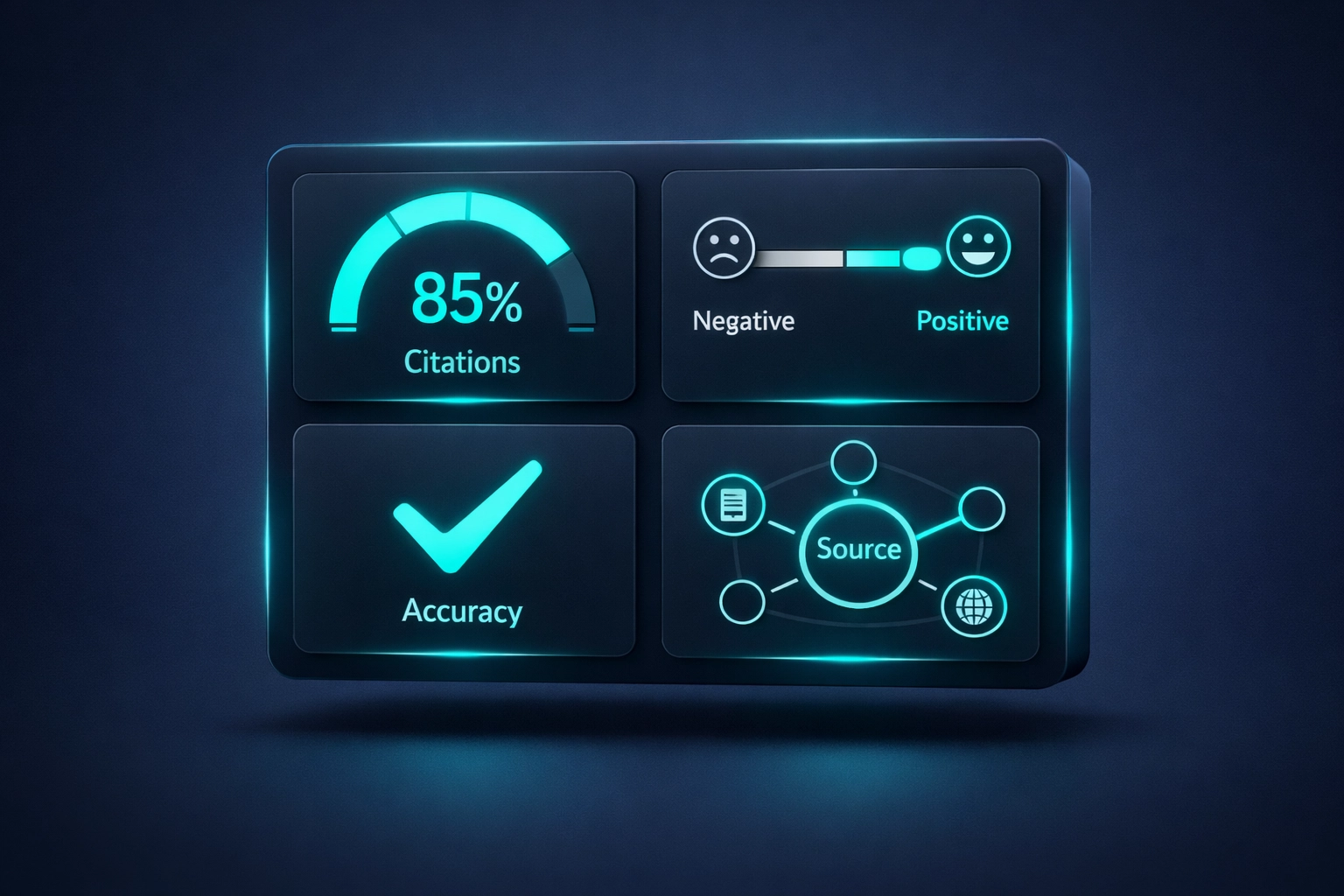
Think about what goes into an AI platform's "opinion" of your brand. It's not just one thing. It's a composite:
How often do AI platforms mention you? If you're tracking 30 queries that your ideal customers might ask, and AI mentions your brand in 9 of them, that's a 30% citation rate. Is that good? Bad? It depends on your category, your competitors, and which platforms you're measuring. But it's a number: and it's a number you can track over time.
What's the sentiment when they do mention you? Being mentioned isn't the same as being recommended. An AI that says "Company X is an option, though it's been criticized for poor customer support" has mentioned you. It hasn't helped you.
Is the information accurate? AI platforms hallucinate. They state incorrect prices, fabricate features, and mischaracterize your positioning. Every inaccuracy is a potential lost deal.
Where are they getting their information? AI models cite sources. Some of those sources are your website. Some are review sites, forums, or competitor comparison pages. The source mix shapes the narrative.
Each of these dimensions tells you something different. Together, they tell you something much more powerful: your overall AI visibility posture. A single composite number that answers the question every marketer should be asking: "When AI talks about my category, how well does it represent my brand?"
Why a composite matters more than individual metrics
It's tempting to focus on just one dimension: citation rate, for example. But individual metrics can be misleading.
A brand with a 60% citation rate sounds healthy. But if the sentiment is neutral-to-negative, the AI is mentioning you while subtly steering prospects elsewhere. A brand with only a 25% citation rate but strong positive sentiment and accurate information might actually be in a better position: AI is recommending them less often, but powerfully when it does.
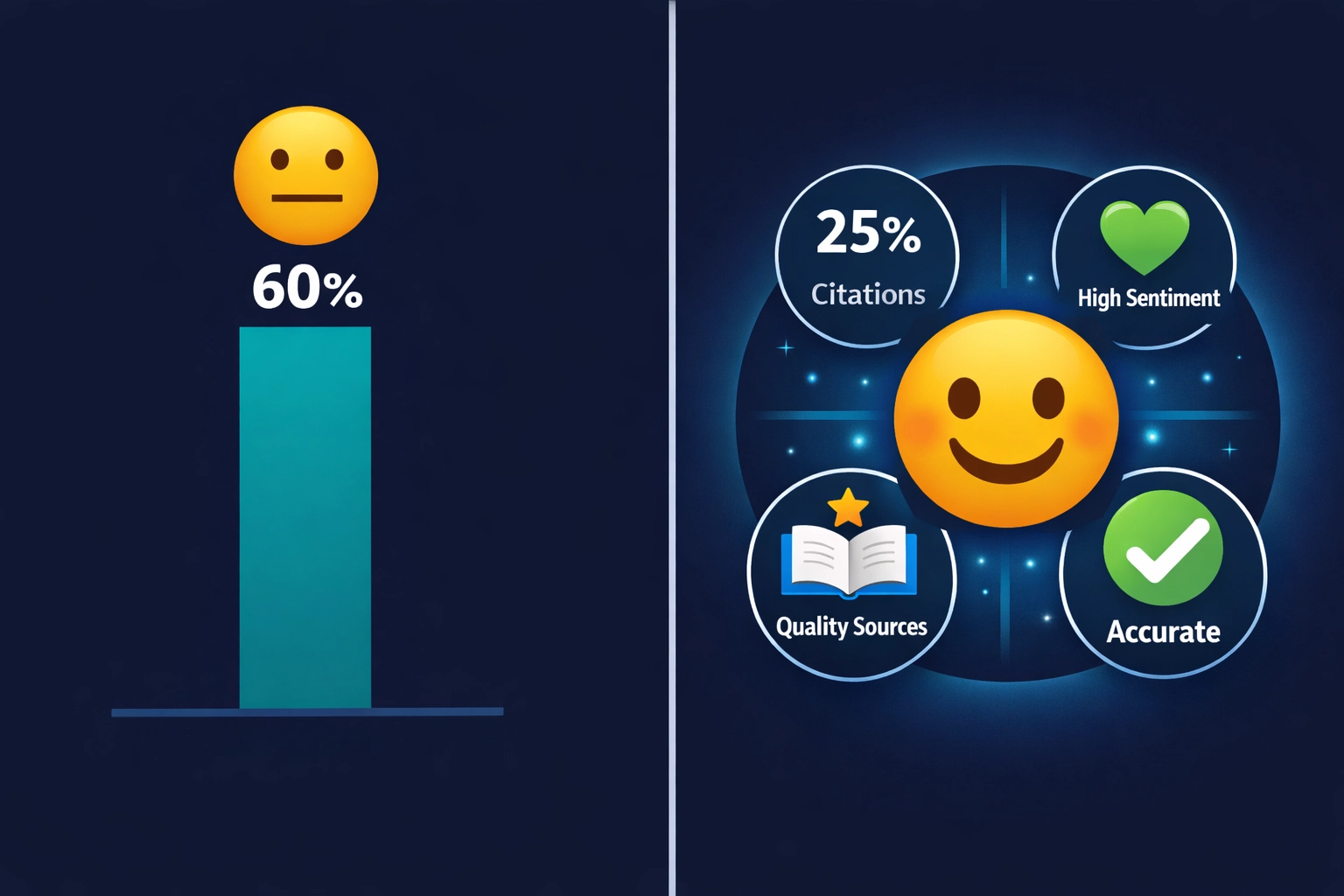
The composite view is what reveals the full picture. It's the difference between checking your bank balance and checking your credit report. One number tells you where you are today. The other tells you where you stand.
How to get a rough read on your AI visibility
You can approximate this manually, though it takes some effort. Pick 10–15 questions your ideal customers would ask an AI assistant about your category. Run them through ChatGPT, Perplexity, and Claude. For each response, note:
- Were you mentioned? (Citation rate)
- Was the mention positive, neutral, or negative? (Sentiment)
- Was everything stated about you factually correct? (Accuracy)
- What sources did the AI reference? (Source attribution)
Do the same for your top two or three competitors. You'll start to see patterns: platforms where you're strong, platforms where you're invisible, competitors who consistently outperform you in AI recommendations.
This gives you a baseline. It's imprecise, but it's better than what most marketers have today, which is nothing.
Doing this manually doesn't scale
Running that exercise once is enlightening. Doing it every week across six AI platforms, dozens of queries, and multiple competitors is a full-time job. And AI responses aren't static: they shift as models get updated and new content gets indexed.

A new category of AI visibility tools has emerged to automate this monitoring and scoring. A few worth evaluating:
CiteMetrix : Tracks visibility across six AI platforms and generates a composite ModelScore (0–100) that factors in citation frequency, sentiment, accuracy, and source attribution. Includes remediation tools for improving your score. Disclosure: this is my platform.
Profound : AI brand monitoring across 10+ models with strong enterprise features. Does not offer a composite scoring metric.
Otterly AI : Tracks brand mentions across five platforms with basic visibility metrics. Good for getting started.
Peec AI : Citation tracking and sentiment across five platforms. Focused on monitoring without composite scoring.
The specific tool matters less than the practice. What matters is that you start treating AI visibility as a measurable, trackable metric: not a vague concern you'll get to someday.
The brands that measure first will win first
Every major shift in digital marketing has followed the same pattern: a new channel emerges, early adopters figure out how to measure it, and the brands with data make better decisions than the brands flying blind.
It happened with SEO in the 2000s. It happened with social media in the 2010s. It's happening with AI visibility right now.
The difference this time is speed. AI adoption is moving faster than any previous channel. The window between "most brands aren't paying attention" and "every brand is tracking this" is going to be short. The marketers who establish their baseline now: who know their score and start improving it: will have a compounding advantage over those who wait.
Your brand already has an AI reputation score. The only question is whether you're going to look at it.
Ready to see what AI says about your brand? Get your ModelScore and start tracking your AI visibility across six platforms. Join the beta (free) →
Eric Richmond is the founder of Expert SEO Consulting and has spent 20+ years helping brands navigate changes in how people find information online. He writes about the intersection of AI, search, and brand visibility.