Part 5 of The AI Visibility Gap series
If you could sit in a room and hear a single, unfiltered synthesis of everything the internet says about your brand : every review, every forum post, every blog mention, every comparison article, every Reddit thread : what would it sound like?
You don't need a room. You just need to ask an AI.
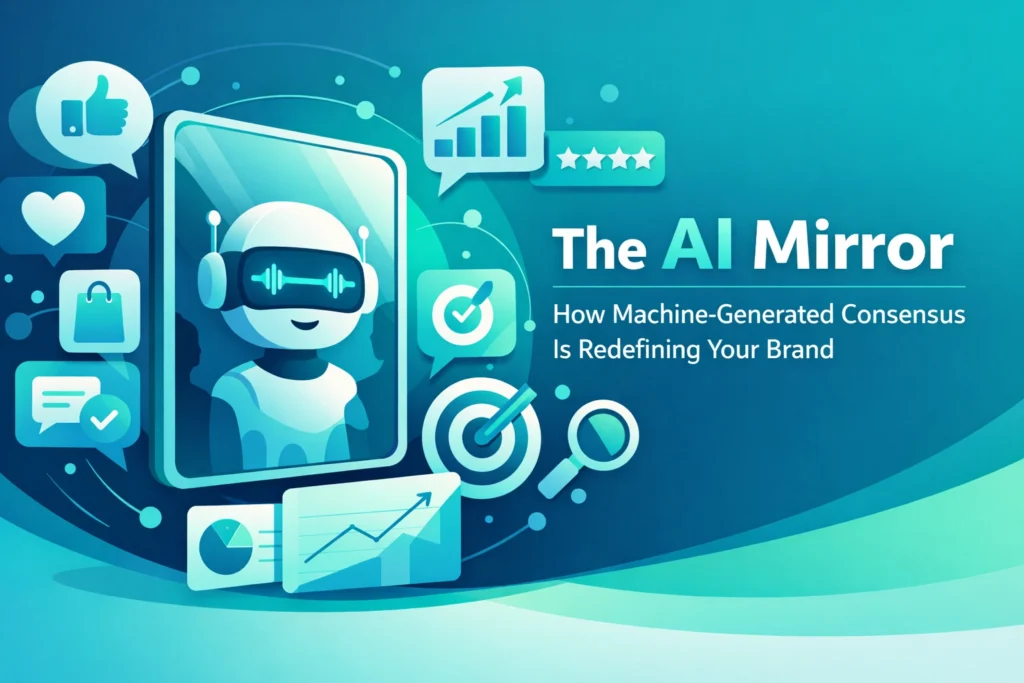
When you prompt ChatGPT or Claude with "Tell me about [your brand]," what comes back is something that didn't exist five years ago: a machine-generated consensus of your brand's reputation, distilled from billions of data points into a few paragraphs. It's the world's largest, most unfiltered focus group : and it's running 24 hours a day whether you participate or not.
AI is holding up a mirror you haven't looked into
Traditional brand perception research is expensive, slow, and small. You commission a study, survey 500 people, wait six weeks for the report, and get a snapshot that's already aging by the time you read it. The sample size limits what you can learn. The structured questions limit what people tell you.
AI platforms offer something fundamentally different. They've absorbed the open internet : the unstructured, uncurated, unfiltered mass of what people and publications say about your brand when nobody's asking them to fill out a survey. And they synthesize it into a narrative every time someone asks.
That narrative is your brand perception in the AI era. And it's being delivered to your prospects whether you've seen it or not.

The themes that define you
When AI describes your brand, it doesn't just list facts. It identifies themes : recurring patterns that shape how it frames you across different queries and contexts.
These themes might be exactly what you'd want: "known for enterprise-grade reliability" or "industry leader in customer support" or "the go-to choice for creative professionals."
Or they might be themes you've spent years trying to move past: "expensive compared to alternatives" or "powerful but complicated" or "strong product, questionable customer service."
The uncomfortable reality is that AI doesn't know about your rebrand. It doesn't know you overhauled your support team last year. It doesn't know that the pricing criticism was based on a tier you discontinued six months ago. AI perception lags behind reality : sometimes by months, sometimes by years : and during that lag, it's telling your story with outdated language.
These themes are worth identifying because they reveal the persistent narratives surrounding your brand. Not what your marketing team says about you. Not what your happiest customers say. The aggregate of what everyone says : weighted by how much content exists and how prominently it appears in the data these models were trained on.
Perception shifts happen in the dark
Here's what makes brand perception in AI particularly tricky: it shifts, and you don't know when.
When a model gets updated : and major models are updated regularly : the training data changes. New content gets included. Older content might be weighted differently. A competitor publishes a comprehensive comparison article that becomes a primary source for the AI's understanding of your category. A negative review on a high-authority site gets picked up and woven into the narrative.
These shifts don't announce themselves. There's no notification. There's no changelog that says "ChatGPT's perception of your brand shifted from 'innovative market leader' to 'established player facing newer competition.'" It just happens, and the next 10,000 people who ask about your category get a slightly different version of your story.
If you're monitoring perception over time, you can catch these shifts early and respond : by publishing content that reinforces the narrative you want, by addressing the criticism that's feeding the negative themes, by creating the kind of authoritative, comprehensive resources that AI models tend to favor.
If you're not monitoring, you find out the hard way: when a prospect mentions something in a sales call that doesn't match your current positioning, or when your conversion rate declines for no obvious reason, or when a board member asks why ChatGPT describes your company as "a legacy player in the space."

Your brand perception isn't uniform across platforms
One of the more surprising findings when brands start monitoring AI perception is how much it varies by platform.
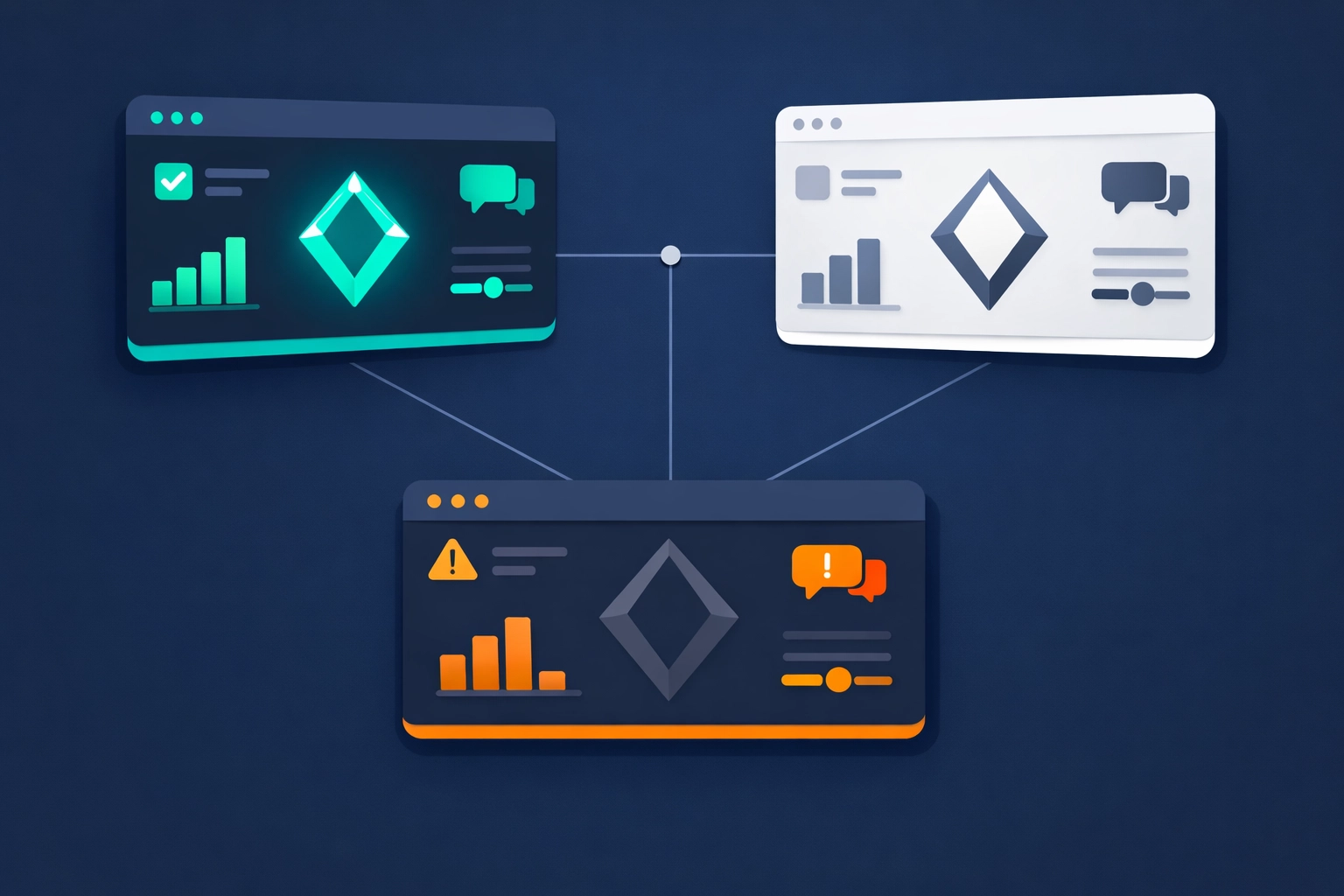
ChatGPT might describe your company as "a leading provider of enterprise analytics." Claude might call you "a well-established player in business intelligence, though facing increasing competition from more modern alternatives." Perplexity might lead with a specific criticism from a review article that happens to rank well in its source index.
Same brand. Same day. Three different narratives.
This variation matters because your prospects aren't all using the same platform. The CMO researching tools on ChatGPT gets one version of your story. The analyst checking Perplexity gets another. The developer asking Claude gets a third. Each one walks away with a different impression of your brand, and none of them know the others got a different answer.
Understanding where your perception is strong and where it's weak, platform by platform, gives you actionable intelligence about the information ecosystem that shapes each model's understanding of your brand.
How to run your own AI perception audit
This is one of the most revealing exercises a marketer can do, and it takes about 30 minutes:
Open ChatGPT, Perplexity, and Claude. Ask each one:
- "Tell me about [your brand]."
- "What is [your brand] known for?"
- "What are people saying about [your brand]?"
- "[Your brand] strengths and weaknesses"
- "How does [your brand] compare to [your category]?"
Don't skim the responses : read them closely. Highlight the recurring themes. Notice which attributes come up consistently and which are mentioned on some platforms but not others. Pay special attention to the language : the specific adjectives and framing that AI uses to describe you.
Then ask the same questions about your top competitor. Compare the narratives side by side. Where is the AI more enthusiastic about them than about you? Where are the themes misaligned with how you want to be perceived?
That comparison is your brand perception gap. It's the distance between your intended positioning and the AI's actual perception : and it's the gap your prospects are experiencing every day.
Doing this manually doesn't scale
A one-time perception audit is valuable. But perception shifts over time, and catching those shifts requires consistent monitoring across platforms. By the time you run your next manual check a month later, the narrative may have already moved.
Several platforms are built to track brand perception across AI systems. A few to evaluate:
CiteMetrix : Tracks brand perception themes across six AI platforms with shift detection over time. Identifies recurring narratives, surfaces platform-by-platform variation, and includes remediation tools for influencing the underlying content that shapes AI perception. Disclosure: this is my platform.
Profound : Brand monitoring across 10+ AI models with perception analysis. Strong enterprise reporting and team workflows.
Scrunch AI : Tracks brand perception across four platforms with a focus on competitive positioning and category analysis.
Peec AI : Monitors brand mentions and sentiment across five platforms. Perception tracking is lighter but provides useful baseline visibility.
The tool you choose matters less than the habit of looking. Brand perception in AI is not a set-it-and-forget-it metric. It's a living narrative that evolves with every model update, every new piece of content published about your brand, and every shift in your competitive landscape.
You're in the focus group whether you like it or not
Traditional focus groups are opt-in. You decide to run one, you recruit participants, you structure the questions, you control the environment.
AI brand perception is opt-out : except there's no opt-out. The focus group is running right now, for every brand in every category, and the results are being delivered directly to your prospects in real time. You didn't commission it. You can't shut it down. But you can listen to what it's saying.
The brands that listen first will be the brands that shape the narrative. Everyone else will be defined by it.
Ready to see what AI says about your brand? Start tracking your AI perception →
Eric Richmond is the founder of Expert SEO Consulting and has spent 20+ years helping brands navigate changes in how people find information online. He writes about the intersection of AI, search, and brand visibility.