For a decade, the "Share of Voice" (SOV) game was simple. You looked at your organic keyword rankings, checked your competitors’ backlink profiles, and calculated how much of the Google Search Results Page (SERP) you owned. If you were in the top three for "best CRM for startups," you were winning.
But as of February 2026, the game has fundamentally changed.
Today, your customers aren't just scrolling through ten blue links. They are asking ChatGPT, "Which CRM should I use for my 10-person agency?" They are asking Perplexity to "Compare CiteMetrix with traditional SEO tools." They are asking Claude to "Summarize the best marketing analytics platforms for 2026."
If your brand isn’t mentioned in those answers: or worse, if your competitor is the only one mentioned: you have a massive visibility problem. You are losing the AI Share of Voice.
In this post, we’re going to break down the current AI market landscape, why tracking your competitors in these "black box" models is critical, and how CiteMetrix helps you visualize and close that gap.
The State of the AI Market in 2026
To track your share of voice, you first need to know where the "voice" is coming from. The landscape is no longer a monopoly. While Google still dominates traditional search, the LLM (Large Language Model) space is fractured.
According to recent data from early 2026, the market looks something like this:
- ChatGPT (OpenAI): Still the leader with roughly 60.7% to 68% market share. However, it’s no longer the undisputed king it was a year ago.
- Google Gemini: Rapidly gaining ground, now sitting between 15% and 21% depending on the region. Gemini’s integration into Android and the Chrome browser has made it a formidable competitor.
- Perplexity: The "search-first" AI. While its total market share is smaller (around 2% to 7%), its growth is explosive: up over 370% year-over-year. For SEO managers, this is the one to watch because it cites sources directly.
- Claude (Anthropic): Holding around 4% of the market but seeing heavy adoption in enterprise and creative sectors due to its high-quality reasoning.
- Microsoft Copilot: Hovering around 13%, benefiting from its deep integration into the Office 365 suite.

Suggested caption: A visualization of the 2026 AI Market Share distribution between ChatGPT, Gemini, Copilot, and Perplexity.
If you only optimize for Google, you are ignoring the platforms where nearly 40% of "search-like" intent is now happening. AI brand monitoring is no longer a luxury; it’s a survival tactic.
What is AI Share of Voice?
Traditional Share of Voice measures your brand's visibility in search results or social media compared to competitors.
AI Share of Voice is different. it measures:
- Presence: Does the AI know you exist when prompted about your category?
- Citations: Does the AI provide a link back to your website as a source of truth?
- Sentiment: When the AI talks about you, is it recommending you or warning against you?
- Comparison Performance: In a "head-to-head" prompt (e.g., "Brand A vs. Brand B"), which one does the AI favor?
The challenge for SEO managers and Brand Directors is that you can’t just "search" for this data. Every AI session is unique. ChatGPT might recommend you to a user in New York but ignore you for a user in London based on the training data and fine-tuning it received that morning.
Why Your Competitors are Winning (And You Don't Know It)
Most brands are currently "AI-blind." They see their traffic in Google Search Console dipping slightly, but they don't see the thousands of conversations happening inside Claude or Gemini where their competitors are being recommended.
Competitors win the AI chat for three main reasons:
- Better Data "Chunking": Their content is structured in a way that LLM crawlers can easily ingest and summarize.
- High Authority in Training Sets: They have been mentioned frequently in high-authority publications (Wikipedia, Reddit, industry news) that the models were trained on.
- Technical AI Readiness: They’ve implemented
llms.txtfiles and structured data that tell AI crawlers exactly what the site is about.
Without ai search visibility tools, you are essentially flying a plane without a radar. You know you’re in the air, but you have no idea if a competitor is about to overtake you.
How CiteMetrix Visualizes the Gap
This is exactly why we built the CiteMetrix Dashboard. We wanted to take the "mystery" out of AI mentions.
Instead of guessing, CiteMetrix allows you to track your brand mentions against your top competitors across all major AI platforms simultaneously.
1. The Share of Voice Heatmap
Our dashboard provides a visual breakdown of which models "prefer" your brand. You might find that you have a 40% share of voice in ChatGPT but only 5% in Perplexity. This tells you exactly where your content strategy is failing.
If Perplexity isn't citing you, it usually means your technical SEO or source-linking strategy needs work. If ChatGPT isn't mentioning you, it likely means your brand hasn't reached the "critical mass" of mentions in the broader web ecosystem used during training.
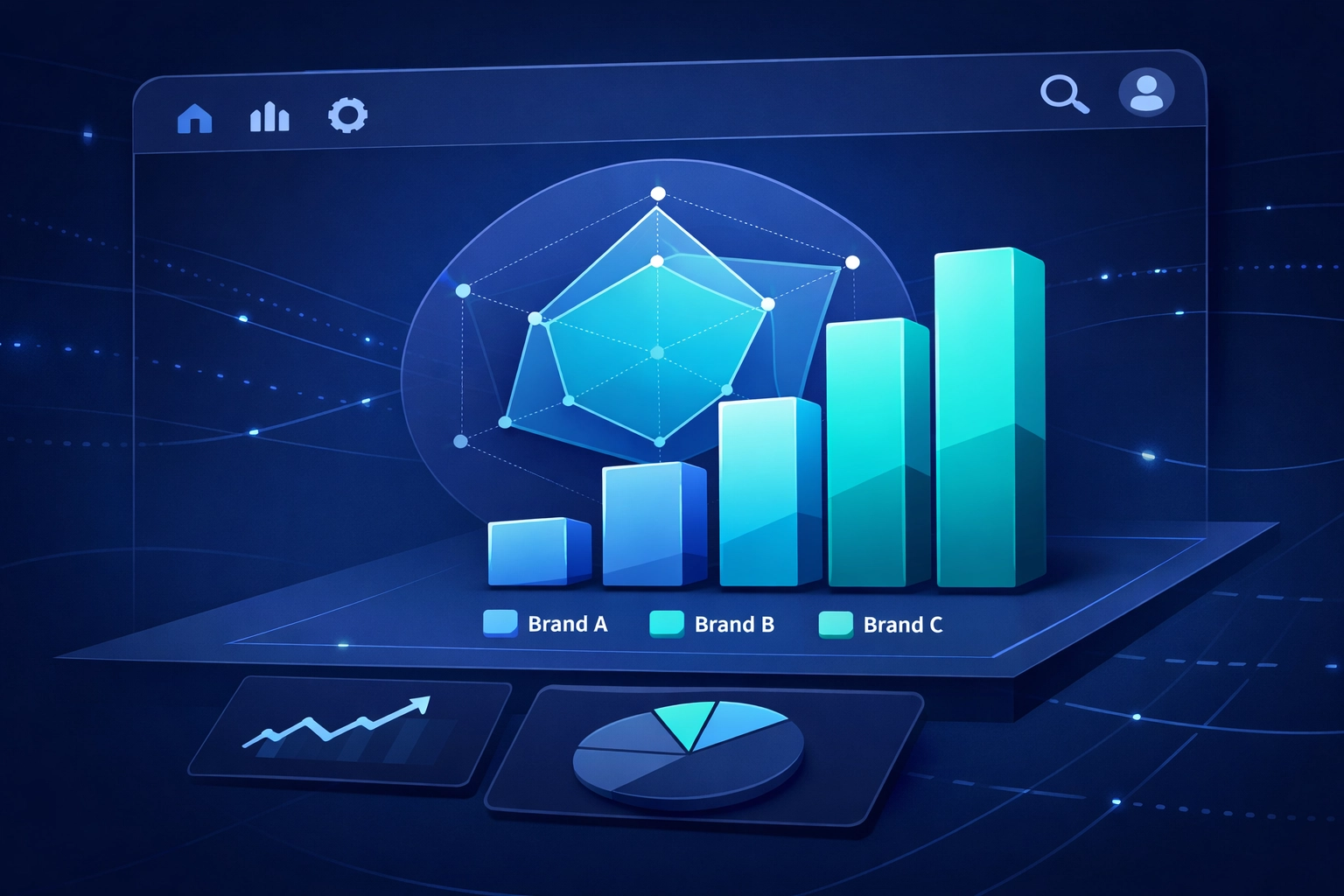
Suggested caption: The CiteMetrix Share of Voice dashboard showing brand mentions compared to competitors across different LLMs.
2. ModelScore™ Analysis
We don't just give you a list of mentions. We use our proprietary ModelScore™ to rank your brand's authority. This score looks at your citation rate, the sentiment of the AI's response, and your technical readiness.
When you see your competitor’s ModelScore climbing while yours plateaus, it’s an early warning sign that they are successfully "seeding" the AI ecosystem with better data.
3. Competitor Comparison Prompts
Want to know what happens when a user asks, "What's the best SaaS for marketing analytics?" CiteMetrix automates these queries across different models and regions to show you exactly how the AI ranks you against your rivals.
Strategies to Increase Your AI Visibility
Once you’ve identified the gap using CiteMetrix, how do you fix it? Here are three actionable steps for SEO managers:
Audit Your Technical AI Readiness
AI models use specific crawlers. If your robots.txt is too restrictive, or if you haven't optimized your site structure for "LLM readability," you’re making it hard for the models to use you as a source. Check out our User Guide for a checklist on technical AI optimization.
Focus on "Niche Authority"
AI models love consensus. If 50 different high-quality blogs all say you are the "Best AI Brand Monitoring Tool," the AI will eventually adopt that as a fact. This isn't about keyword stuffing; it’s about digital PR and getting mentioned in the places the AI "reads."
Use Data-Backed Content
Perplexity and Gemini (in search mode) prioritize sites that provide hard data, clear lists, and direct answers. If your content is "fluffy," the AI will struggle to cite it. Be the source of the data, and you’ll become the source of the citation.
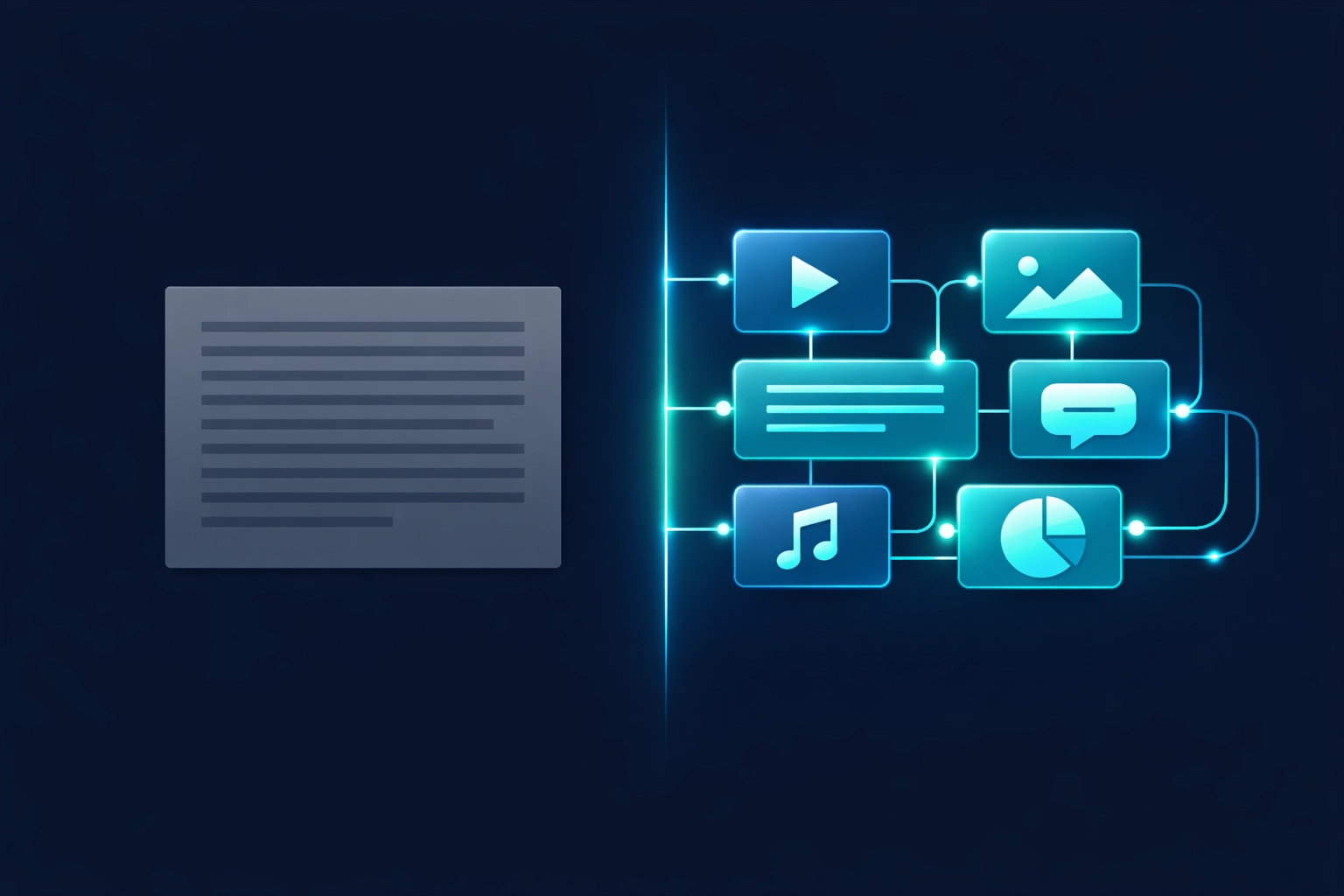
Suggested caption: A comparison of "AI-Friendly" content structure vs. traditional long-form blog posts.
Stop Guessing, Start Tracking
The transition from "Search Engines" to "Answer Engines" is the biggest shift in digital marketing since the invention of the smartphone. You can't manage what you can't measure.
If you are a Brand Director or an SEO Manager, your job description has officially changed. You are no longer just managing clicks; you are managing reputation inside the machine.
Are you winning the AI chat? Or are you letting your competitors define your category?
Ready to see your AI visibility?
Join the beta (free) → citemetrix.com
Want to see how you stack up?
See what AI says about your brand → citemetrix.com
Not sure where to start?
Book a demo with our team → citemetrix.com/book-demo
The era of AI search is here. Don't be the brand that gets left out of the conversation. Check your ModelScore™ today and start taking back your share of voice.