Here's a question that keeps SEO professionals up at night:
What happens when someone asks ChatGPT "What's the best marketing analytics tool?" and your brand isn't in the answer?
You're invisible. That's what happens.
And it's happening more often than you think. AI-powered search tools like ChatGPT, Perplexity, and Google's Gemini are changing how people find information. Instead of scrolling through ten blue links, users get direct answers: often with specific brands mentioned.
If you're not one of those brands getting cited, you've got a problem.
Welcome to Generative Engine Optimization (GEO). This guide will show you exactly what it is, why it matters, and how to start getting your brand cited by AI today.
What Is Generative Engine Optimization?
Generative Engine Optimization is the practice of shaping your content so AI search tools can easily understand, trust, and cite it in their responses.
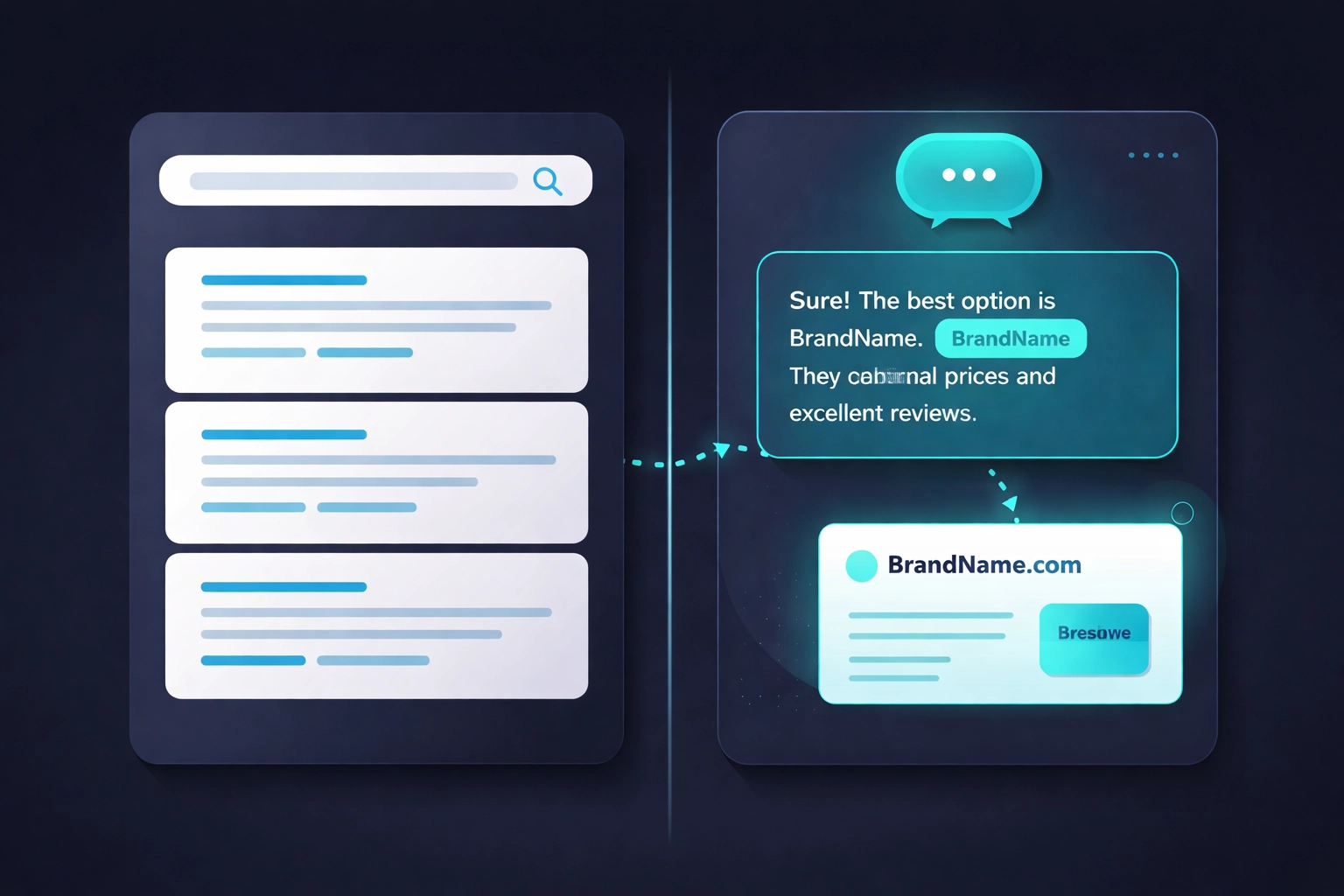
Think of it this way: Traditional SEO helps you rank on Google's results page. GEO helps you show up inside the AI's answer.
When someone asks Perplexity "What CRM should I use for my small business?", the AI doesn't just return a list of links. It synthesizes information from across the web and gives a direct recommendation: often naming specific brands.
GEO is how you become one of those named brands.
Why GEO Matters Right Now
Let's be real: AI search isn't coming. It's here.
ChatGPT has over 100 million weekly users. Perplexity is growing fast. Google is integrating AI overviews directly into search results. Microsoft's Copilot is baked into Windows and Edge.
This shift changes the game for a few reasons:
1. Visibility moves upstream. In traditional search, you compete for clicks. In AI search, you compete for citations. If the AI doesn't mention you, there's no link for users to click.
2. Authority matters more than ever. AI models evaluate whether your content is trustworthy, comprehensive, and citable. Keyword stuffing won't cut it here.
3. Your competitors are catching on. Early movers who optimize for AI visibility now will build an advantage that's hard to overcome later.
The brands that figure out GEO first will own the AI-generated answers in their space. Everyone else will wonder where their traffic went.
GEO vs. Traditional SEO: What's Different?
If you've been doing SEO for a while, some GEO principles will feel familiar. But there are key differences:
| Traditional SEO | Generative Engine Optimization |
|---|---|
| Optimize for rankings | Optimize for citations |
| Target keywords | Answer questions |
| Win the click | Win the mention |
| Backlinks drive authority | Content quality drives authority |
| Technical SEO for Googlebot | Technical setup for AI crawlers |
The biggest mindset shift? GEO requires content that's genuinely helpful and citable: not just optimized for click-through rates.
AI systems evaluate whether your content actually answers user questions comprehensively. They're looking for expertise, not keyword manipulation.

The 5 Core Principles of GEO
Ready to get practical? Here are the foundational principles that make content AI-citable:
1. Answer Real Questions in Natural Language
AI tools are trained on conversational queries. People ask them questions the way they'd ask a colleague.
Instead of optimizing for "best CRM software 2026," think about how someone would actually phrase the question: "What CRM should I use for a 10-person sales team?"
Write content that directly answers these natural questions. Use the actual question as a header, then give a clear, helpful answer.
2. Structure Your Content for Easy Parsing
AI models scan your content to understand its meaning and context. Make their job easy:
- Use clear H2 and H3 headers that describe what follows
- Keep paragraphs short (2-4 sentences max)
- Use bullet points and numbered lists
- Include a TL;DR or summary section
- Define key terms and entities clearly
Well-structured content gets cited more often. It's that simple.
3. Add Schema Markup
Schema markup tells AI systems what different parts of your page represent. It's like adding labels to your content.
Key schema types to implement:
- FAQ Schema: For question-and-answer content
- How-To Schema: For step-by-step guides
- Article Schema: For blog posts and news content
- Organization Schema: For your brand information
Google's Structured Data Helper makes this easier than you'd think.
4. Build Genuine Topical Authority
AI models cite sources they consider authoritative. You build authority by:
- Creating comprehensive content on your core topics
- Publishing consistently over time
- Getting mentioned by other authoritative sources
- Maintaining accurate, up-to-date information
This isn't something you can fake. AI systems are surprisingly good at identifying genuine expertise.
5. Make Sure AI Can Actually Access Your Site
This is the technical piece most people miss. AI crawlers need to be able to read your content.
Check your robots.txt file. Some sites accidentally block AI crawlers like GPTBot or PerplexityBot. If you want to get cited, you need to let them in.
Consider implementing an llms.txt file: a new standard that helps AI systems understand your site structure and find your best content.

Your GEO Quick Start: Do This Week
Theory is nice, but let's get actionable. Here's what to do in the next 7 days:
Day 1-2: Test Your Current Visibility
Open ChatGPT, Perplexity, and Gemini. Ask 5-10 questions your ideal customers would ask about your product category.
Document whether your brand appears in any responses. Screenshot everything. This is your baseline.
Day 3-4: Audit One High-Traffic Page
Take your best-performing blog post and apply GEO formatting:
- Break up long paragraphs
- Add descriptive subheadings
- Convert dense text to bullet lists
- Add a clear summary at the top
- Include specific statistics with sources
Day 5-6: Add Schema Markup
Pick your top 3 pages. Add appropriate schema markup using Google's tools. FAQ pages are the easiest place to start.
Day 7: Check Your Technical Setup
Review your robots.txt file. Make sure you're not blocking AI crawlers. Consider adding an llms.txt file.
That's it. One week of focused work, and you'll be ahead of 90% of your competitors.
Tracking Your AI Visibility
Here's the problem most marketers face: how do you know if any of this is working?
Traditional analytics won't help you. Google Analytics can't tell you when ChatGPT mentions your brand. Search Console doesn't track Perplexity citations.
You need to measure what matters:
- Citation frequency: How often does AI mention your brand?
- Share of voice: How do you compare to competitors in AI answers?
- Sentiment: What does AI say about you when it does mention you?
- Query coverage: Which questions trigger mentions of your brand?
At CiteMetrix, we built our platform specifically to solve this problem. You can track your AI citations across ChatGPT, Perplexity, and other models: all in one dashboard. Our ModelScore gives you a single number that represents your overall AI visibility, so you can track progress over time.

The Long Game
GEO isn't a one-time optimization. It's an ongoing practice.
Set up a testing cadence. Run 20-30 prompts through AI tools weekly. Track which content gets cited and which doesn't. Iterate based on what you learn.
The brands that commit to this now: while it's still early: will build a compounding advantage. Every citation builds authority. Every mention makes the next one more likely.
AI search is only going to grow. The question isn't whether you should optimize for it. It's whether you'll start now or scramble to catch up later.
Ready to see what AI says about your brand? Get your ModelScore and start tracking your AI citations → citemetrix.com