Remember when SEO was all about stuffing keywords into your content and building backlinks? Those were simpler times.
Today, the game has changed. People aren't just typing keywords into Google anymore: they're asking ChatGPT for recommendations, using Perplexity to research purchases, and relying on AI assistants to make decisions.
And here's the thing: when an AI answers a question like "What's the best CRM for small businesses?" it doesn't show a list of ten blue links. It gives an answer. Maybe two or three brands get mentioned.
If you're not one of them, you're invisible.
Welcome to the era of LLM SEO: where the goal isn't just ranking on a search results page. It's getting cited by AI.
The Old Playbook: Keywords, Rankings, and Blue Links
For two decades, SEO followed a pretty straightforward formula:
- Research keywords people search for
- Create content targeting those keywords
- Build backlinks to boost authority
- Climb the rankings
- Win traffic
It worked. You'd optimize a page for "best project management software," rank on page one, and watch the clicks roll in.
But that model assumed one thing: people would always go to a search engine, type in a query, and scroll through results to find what they need.
That assumption is crumbling.

The New Reality: AI Gives Answers, Not Options
When someone asks ChatGPT or Perplexity a question, they're not looking for a list of websites to visit. They want an answer. Right now.
And the AI delivers. It synthesizes information from across the web, picks the most relevant sources, and presents a concise response: often citing specific brands, tools, or companies by name.
This is the shift from keywords to citations.
Instead of competing to rank for a keyword, you're now competing to be the brand that AI mentions when that topic comes up.
Think about the difference:
| Traditional SEO | LLM SEO |
|---|---|
| Rank for keywords | Get cited in AI responses |
| Compete for clicks | Compete for mentions |
| Optimize for crawlers | Optimize for understanding |
| Backlinks = authority | Being the definitive answer = authority |
| Traffic as the metric | Citations as the metric |
This isn't a minor evolution. It's a fundamental shift in how visibility works online.
What Exactly is LLM SEO?
LLM SEO (Large Language Model SEO) is the practice of optimizing your brand and content to be referenced, recommended, and cited by AI systems like ChatGPT, Claude, Perplexity, and Google's AI Overviews.
You might also hear it called:
- GEO (Generative Engine Optimization)
- AIEO (AI Engine Optimization)
- AIO (AI Optimization)
Different names, same idea: making sure AI knows about your brand and trusts it enough to recommend you.
The key difference from traditional SEO? LLMs don't evaluate content the same way search engines do.
Traditional search engines care a lot about backlinks, domain authority, and keyword matching. LLMs care more about:
- Semantic relevance – Does your content actually answer the question?
- Answer completeness – Do you cover the topic thoroughly?
- Structured formatting – Can the AI easily extract and understand your information?
- Third-party validation – Do other credible sources mention you?
Pages with comprehensive schema markup, clear headings, and well-structured content get cited significantly more often. Meanwhile, keyword-stuffed content that ranks well in traditional search might get completely ignored by AI.

Why This Matters More Than You Think
Here's a stat that should get your attention: a growing percentage of searches never result in a click to any website. Users get their answer directly from AI: whether that's in Google's AI Overview, a ChatGPT conversation, or a Perplexity response.
If your entire strategy is built around earning clicks from search results, you're fighting over a shrinking pie.
But if you're the brand that AI cites? You're getting in front of people at the exact moment they're making decisions: without them ever needing to visit your website first.
That's brand visibility at scale. And it's happening whether you're optimizing for it or not.
The question is: are you showing up?
How to Optimize for AI Citations
Getting cited by LLMs isn't magic. It requires a different approach than traditional SEO, but it's absolutely learnable. Here's what works:
Structure Your Content for AI Consumption
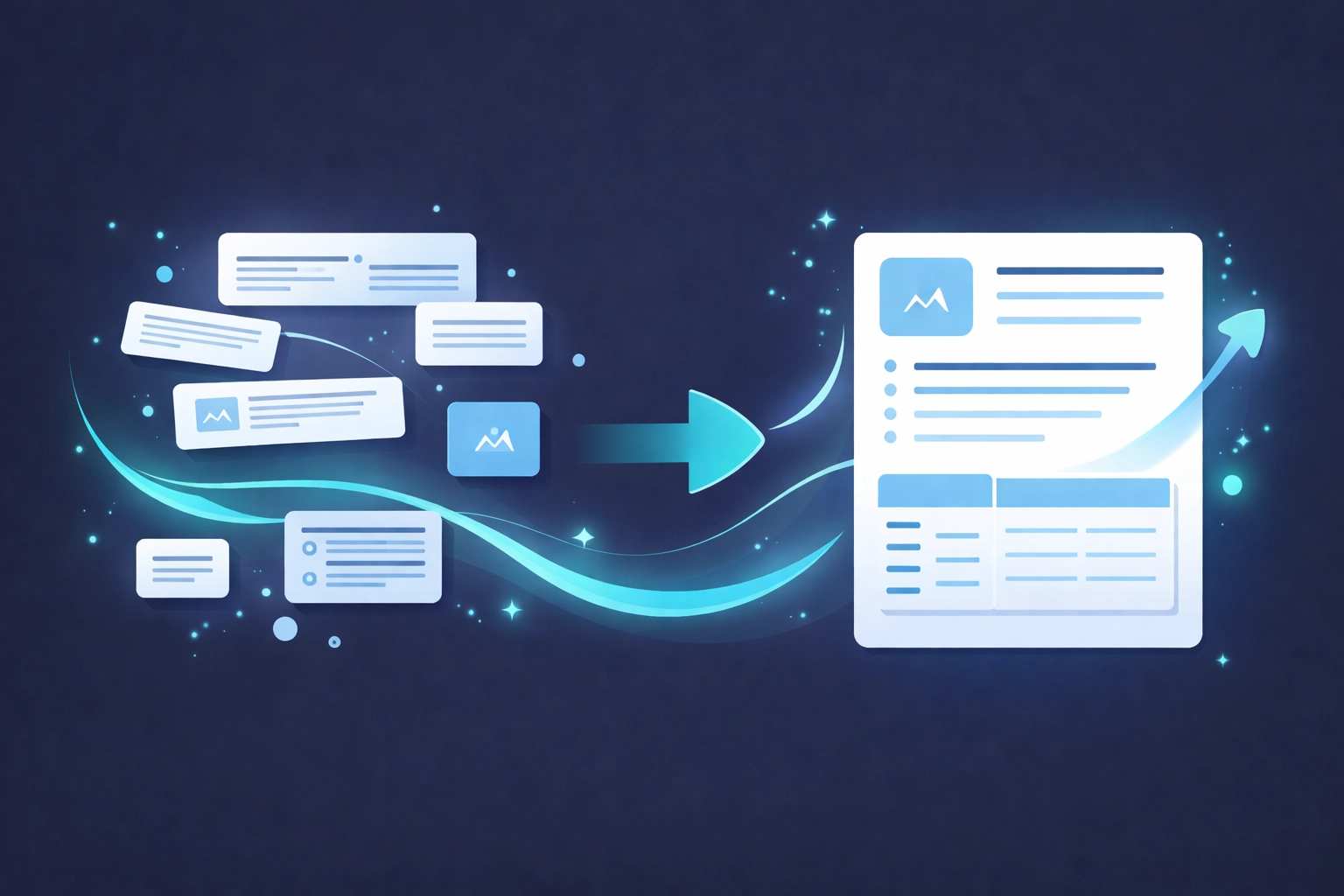
LLMs process structured content much faster than messy HTML. Use:
- Clear H1, H2, and H3 headings for every subtopic
- Bullet points for lists, comparisons, and instructions
- Short paragraphs focused on single points
- Tables for data comparisons
- FAQ sections with direct question-and-answer formats
Write Conversationally
AI models are trained on natural language. They understand (and prefer) content that sounds like how people actually talk and ask questions.
Instead of writing "CRM software solutions for enterprise organizations," write "What's the best CRM for large companies?"
Test your content by reading it aloud. If it sounds robotic, rewrite it.
Be the Definitive Answer
LLMs want to cite sources that completely answer a question. Thin content doesn't cut it.
Create comprehensive guides that address every aspect of a topic. Cover the nuances, anticipate follow-up questions, and provide concrete examples.
Implement Schema Markup
Structured data using JSON-LD schema helps AI understand what your content is about. Focus on:
- Article schema for blog posts
- FAQPage schema for Q&A content
- HowTo schema for tutorials
- Organization and Person schema to establish authority
Build Third-Party Credibility
LLMs don't just look at your content: they look at what others say about you. Getting mentioned in industry publications, earning citations from credible sources, and building genuine brand recognition all contribute to AI trust signals.
Keep Content Fresh
LLMs pay attention to publish and revision dates. Regularly updated content signals relevance and accuracy.
The Problem: You Can't Optimize What You Can't Measure
Here's where most brands get stuck.
You can check your Google rankings. You can see your traffic in analytics. But how do you know if ChatGPT mentions you? How do you track whether Perplexity recommends your product?
Most companies have no idea. They're flying blind.
That's exactly why we built CiteMetrix.
How CiteMetrix ModelScore Changes the Game
CiteMetrix gives you visibility into what's been invisible: your brand's presence in AI-generated responses.
Our ModelScore is a single metric that shows how well your brand performs across AI platforms. It combines:
- Citation frequency – How often AI mentions you
- Brand demand signals – How much people search for you by name
- Authority indicators – How credible AI perceives your brand
- Technical readiness – Whether AI crawlers can access and understand your content
Instead of guessing whether your AI visibility strategy is working, you can actually measure it. Track changes over time. See how you compare to competitors. Understand what's driving (or hurting) your citations.
It's the same kind of visibility you expect from SEO tools: but for the AI layer of search.
The Hybrid Approach: Traditional SEO + LLM SEO
To be clear: traditional SEO isn't dead. Google still drives massive amounts of traffic, and ranking well still matters.
But if you're only optimizing for traditional search, you're leaving a growing channel completely unaddressed.
The smartest brands are taking a hybrid approach:
- Maintain strong traditional SEO fundamentals
- Layer in LLM-specific optimizations
- Measure performance across both channels
- Adjust strategy based on where their audience is actually searching
The search landscape is fragmenting. Winners will be the brands that show up everywhere their customers are looking: including in AI conversations.
Ready to See Your AI Visibility?
The shift from keywords to citations isn't coming. It's already here.
The only question is whether you're tracking it.
Get your ModelScore and see what AI says about your brand → citemetrix.com