Here's a scenario that's happening millions of times a day:
Someone needs to find the best project management software for their team. Instead of typing "best project management software 2026" into Google, they open ChatGPT and ask: "What's a good project management tool for a remote team of 10 people?"
They get an answer. A clear, confident recommendation with reasoning. Maybe a few alternatives.
They never visit a search engine. They never see your carefully optimized landing page. Your #1 ranking for "best project management software"? Completely irrelevant.
This is the new reality. And it's why traditional SEO, while still valuable, isn't enough anymore.
Traditional SEO Still Matters, But It's Not the Whole Picture
Let's be clear: we're not saying throw out your SEO playbook. Keywords, backlinks, site speed, mobile optimization, all of that still matters for Google and traditional search.
But here's the problem.
Traditional SEO metrics tell you how visible you are on search engine results pages. They don't tell you anything about your visibility in AI-generated answers.
And that's a growing blind spot.
When someone asks ChatGPT, Perplexity, Claude, or Gemini for a recommendation, those AI systems pull from their training data and, in some cases, real-time sources. They synthesize an answer. They might mention your brand, or they might not.
Your Google Analytics won't show you this. Your rank tracker won't either. You're optimizing for one channel while an entirely new one is gaining ground beneath you.
The Zero-Click Problem Just Got Bigger
Marketers have been worried about zero-click searches for years. You know the type, someone searches "how tall is the Eiffel Tower," and Google shows the answer right there. No click needed.
AI takes this to a whole new level.
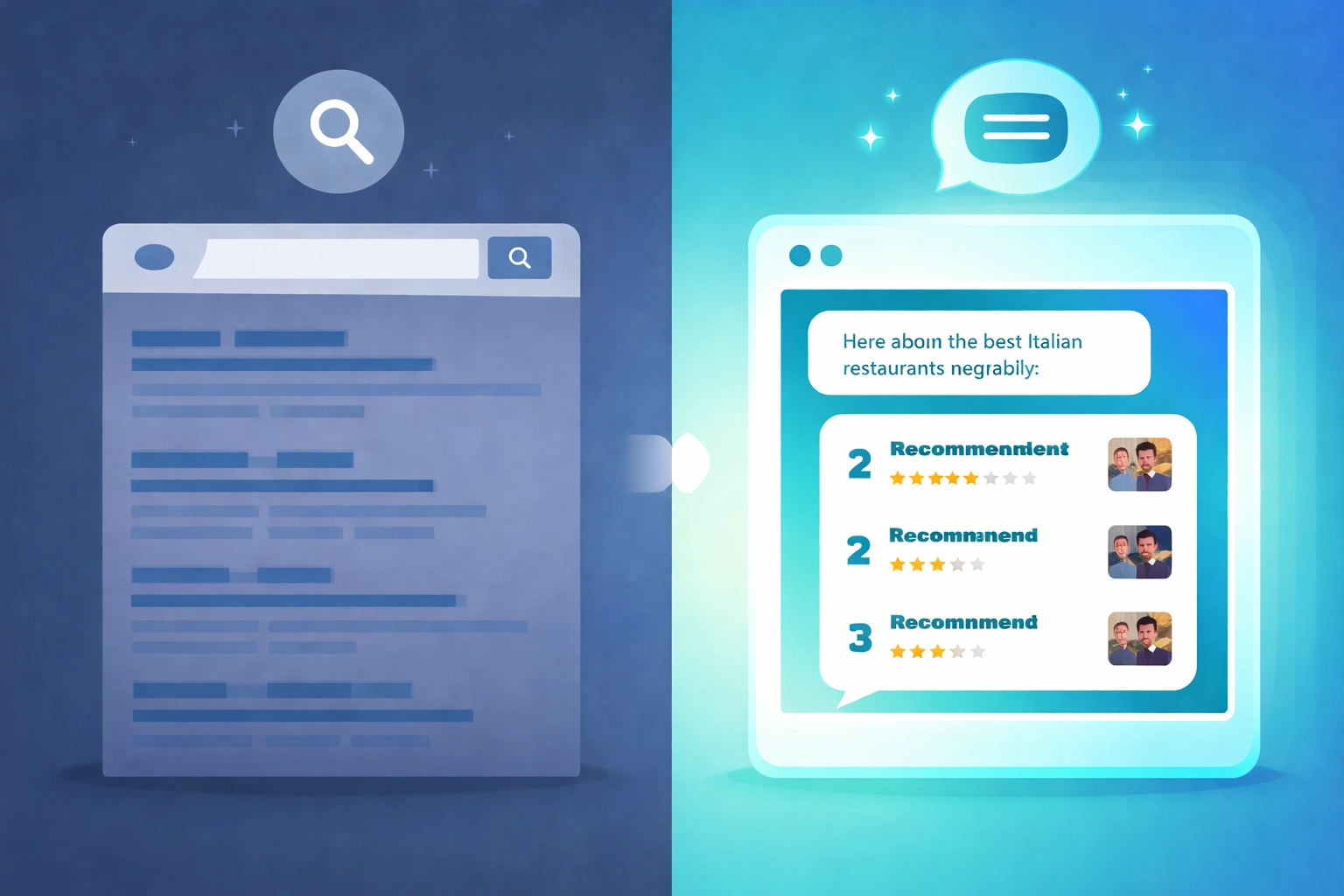
When someone uses an AI assistant for research, recommendations, or decisions, they often get everything they need in one response. There's no list of blue links. No opportunity to catch their attention with a clever meta description.
The AI gives them the answer. Your website might have informed that answer somewhere along the way, but you'll never see the traffic.
Here's the uncomfortable truth: being ranked is no longer the same as being seen.
AI platforms have little incentive to send users to external websites. Their whole value proposition is keeping you in the conversation, giving you answers without making you hunt for them.
So if your strategy is 100% focused on getting clicks from search engines, you're optimizing for a shrinking piece of the pie.
Keywords Aren't Enough Anymore
Traditional SEO is built on keywords. You find the terms people search for, you optimize your pages around them, and you try to rank.
It's a system that's worked for two decades. But AI doesn't work the same way.
People don't talk to AI assistants like they type into Google. They ask full questions. They use natural language. They ramble, clarify, and follow up.
"What's a good CRM for a small e-commerce business that integrates with Shopify and isn't too expensive?" isn't a keyword. It's a conversation.
AI systems are trained to understand intent, context, and meaning, not just match keywords. They prioritize content that demonstrates genuine expertise and provides clear, useful answers.
When marketers cling to rigid keyword strategies, they optimize for yesterday's search behavior. The game has changed, and the rules are different.
New Metrics for a New Era
So if clicks and rankings aren't telling the whole story, what should you be tracking?
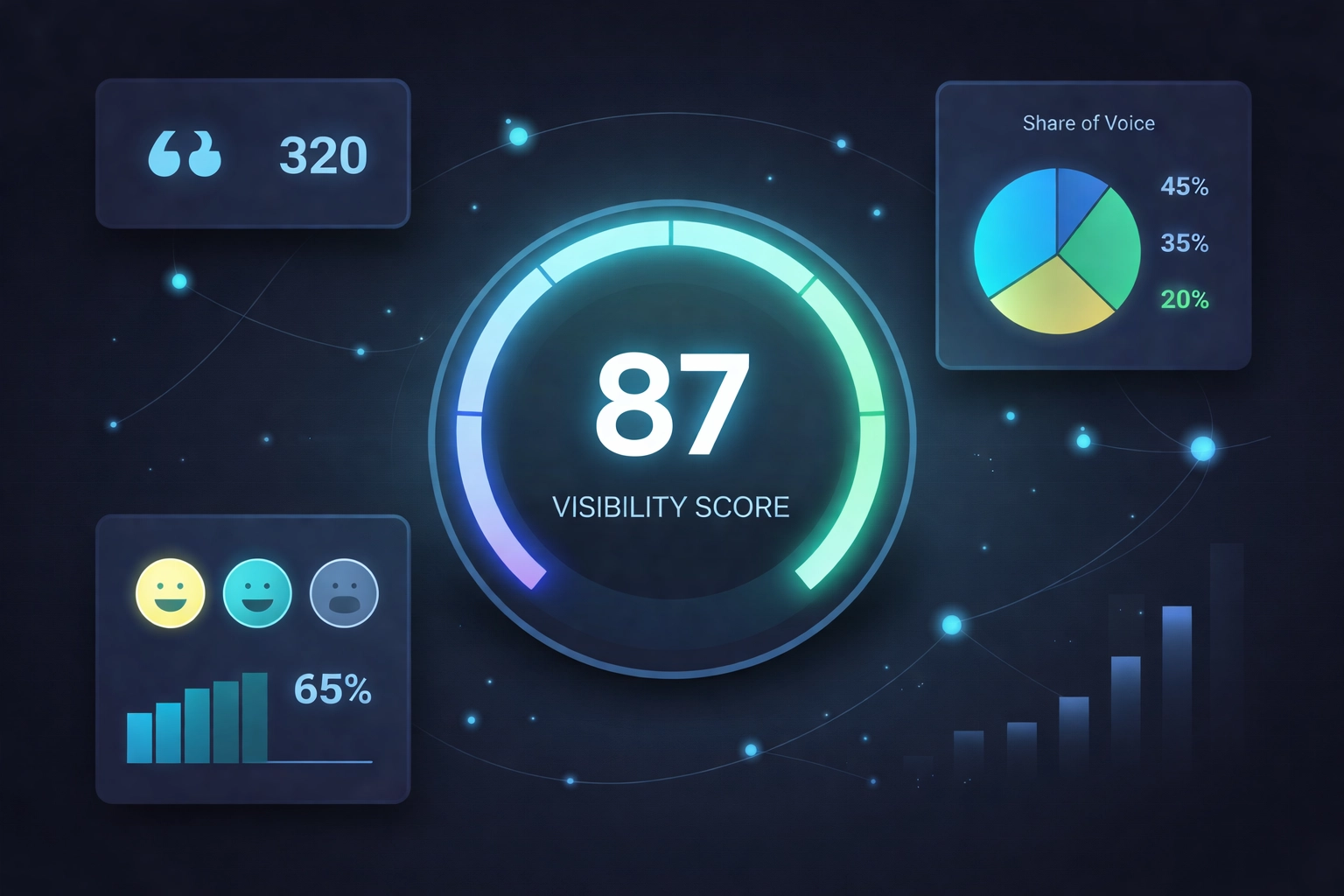
Citations. How often does your brand appear in AI-generated answers? When someone asks an AI assistant about your industry, your product category, or a problem you solve, are you mentioned?
Share of voice. When AI recommends options, how often are you one of them? How do you stack up against competitors in AI-generated responses?
Sentiment. When AI does mention you, what's it saying? Is it a recommendation or a warning? Is the context positive, neutral, or negative?
These are the metrics that matter in AI search optimization. And until recently, there was no good way to track them.
That's exactly why we built CiteMetrix.
What AI Search Optimization Actually Looks Like
If traditional SEO is about ranking on search engine results pages, AI search optimization (also called GEO or generative engine optimization) is about getting your brand into AI-generated answers.
Different goal. Different tactics.
Here's what actually moves the needle:
Structure Your Content for AI
AI systems prefer content that's well-organized and easy to parse. Clear headings, logical structure, direct answers to common questions. Think about how an AI would extract and summarize your content: then make that job easier.
Build Genuine Authority
AI systems are trained to prioritize authoritative sources. That means E-E-A-T (Experience, Expertise, Authoritativeness, Trustworthiness) matters more than ever. Original research, expert perspectives, and demonstrated experience all help.
Answer Questions Directly
If your content dances around answers or buries the useful stuff under fluff, AI will look elsewhere. Be helpful. Be direct. Be the source that actually answers the question.
Make Sure AI Can Find You
This is the technical side. Can AI crawlers access your site? Do you have an llms.txt file? Is your content structured in a way that AI systems can easily understand?
The Gap in Your Analytics
Here's what frustrates us about the current state of marketing analytics:
You can track every click, every pageview, every conversion from Google. You can see exactly which keywords drive traffic and which pages perform best.
But when it comes to AI? Silence.
Someone asks ChatGPT for recommendations in your space. It mentions your competitor. That person becomes a customer: of your competitor. You never knew the conversation happened. You never had a chance to compete.
This is the blind spot. And it's getting bigger every day as more people shift their research and decision-making to AI assistants.
Traditional SEO tools can't help here. Google Analytics can't help here. You need something built specifically to track AI visibility.
How CiteMetrix Fills the Gap
We built CiteMetrix because this problem was driving us crazy.
We wanted to know: when people ask AI about our space, are we getting mentioned? What are AI systems actually saying about us? How do we compare to competitors?
CiteMetrix gives you that visibility. Here's what you get:
ModelScore™ : A single number that tells you how visible your brand is across major AI platforms. Think of it like a credit score for AI visibility.
Citation Tracking : See when and where your brand gets mentioned in AI-generated responses. Track it over time. Spot trends.
Competitive Analysis : Find out how your AI visibility stacks up against competitors. See who's getting cited when you're not.
Sentiment Analysis : Understand not just whether you're mentioned, but how. Is the AI recommending you or warning people away?
It's the analytics layer that's been missing from every marketing stack.
The Brands That Adapt Will Win
We're at an inflection point. AI assistants are becoming a primary way people research, discover, and decide. The brands that figure out AI search optimization early will have a massive advantage.
The brands that keep optimizing only for Google? They'll wonder why their traffic is declining even though their rankings look fine.
Traditional SEO isn't dead. But it's not enough anymore.
You need to see the full picture. You need to know what AI is saying about you: and what it's not.
Ready to see your AI visibility?
Get your ModelScore and start tracking your AI citations. Join the beta free at citemetrix.com.