Your brand might be crushing it on Google. Rankings up, traffic flowing, conversions steady.
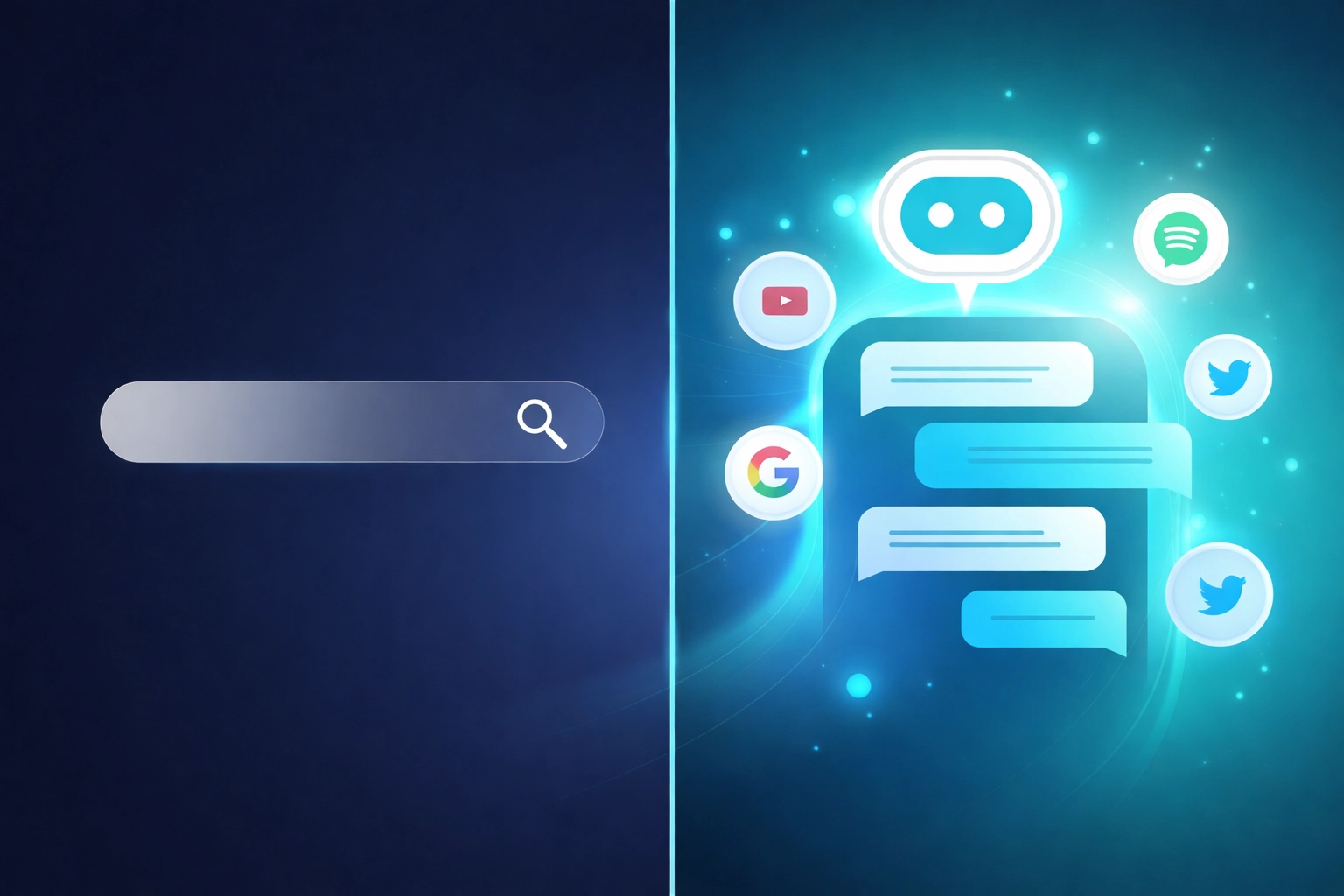
But here's the thing: a growing number of people aren't Googling anymore. They're asking ChatGPT. They're using Perplexity. They're getting answers from Claude, Gemini, and Copilot.
And when someone asks an AI assistant "What's the best project management tool?" or "Which CRM should I use for my small business?": do you have any idea if your brand gets mentioned?
If you're like most companies, you don't. That's a massive blind spot.
The good news? A new category of AI SEO tools has emerged to solve exactly this problem. These platforms track how your brand appears (or doesn't appear) in AI-generated responses.
Let's break down the five tools you should know about: and which one might be right for your business.
Why AI Visibility Tracking Matters Now
Traditional SEO tools track your Google rankings. Your analytics platform tracks your website traffic. But neither tells you what happens when someone bypasses search engines entirely and asks an AI for recommendations.
This shift isn't coming. It's already here.
Millions of people use AI assistants daily to research products, compare solutions, and make buying decisions. If your brand isn't being cited in those conversations, you're invisible to an entire segment of potential customers.
That's where AI SEO tools come in. They monitor what AI models say about your brand across platforms like ChatGPT, Perplexity, Gemini, Claude, and Google's AI Overviews.
What to Look for in an AI SEO Tool
Before we dive into the specific tools, here's what matters when evaluating them:
Multi-platform coverage. You want visibility across all major AI engines, not just one.
Citation tracking. Does the tool show you exactly when and how your brand gets mentioned?
Competitor benchmarking. How do you stack up against others in your space?
Actionable insights. Data is great, but what do you actually do with it?
Ease of use. You shouldn't need a PhD to understand your dashboard.
With that framework in mind, let's look at the top five options.
1. CiteMetrix : Best for AI Citation Tracking and Visibility Scoring
CiteMetrix was built specifically to answer the question: "What does AI say about my brand?"
The platform monitors your brand's presence across all major AI engines: ChatGPT, Perplexity, Gemini, Claude, and Google AI Overviews: and gives you a clear picture of your AI visibility.
What sets it apart:
- ModelScore™ : A proprietary score that measures your overall AI visibility across citation frequency, brand demand, authority, and technical accessibility.
- Citation tracking : See exactly when and where AI models mention your brand, including the context and sentiment of those mentions.
- Competitor analysis : Track your share of voice against competitors in AI-generated responses.
- AI Crawler Check : Verify that AI crawlers can actually access and index your content.
- Integrations : Connect with Google Search Console and GA4 to see the complete picture.
CiteMetrix takes a straightforward approach: show you what AI says about your brand, help you understand why, and give you the data to improve.
Best for: Brands that want a dedicated AI visibility platform with a clear, actionable scoring system.
Get your ModelScore → citemetrix.com

2. Semrush AI Visibility Toolkit : Best for Existing Semrush Users
If you're already deep in the Semrush ecosystem, their AI Visibility Toolkit adds AI monitoring to your existing workflow.
The toolkit measures how often your brand appears in AI-generated answers and compares your visibility against competitors. You get an AI Visibility Score, estimated monthly impressions across AI systems, citation counts, and trend graphs.
What it offers:
- AI Visibility Score for your domain
- Estimated impressions across AI platforms
- Citation tracking with trend analysis
- Competitor comparison
- Integration with Semrush's broader SEO suite
The catch: It's part of the larger Semrush platform, so you're paying for (and navigating) a lot of features you might not need if AI visibility is your primary focus.
Best for: Teams already using Semrush who want to add AI tracking without adopting another tool.
3. Passionfruit : Best for Revenue Attribution
Passionfruit positions itself as a Generative Engine Optimization (GEO) specialist. Their focus goes beyond just tracking mentions: they try to connect those mentions to actual revenue.
The platform monitors brand appearances across ChatGPT, Perplexity, Gemini, and Claude, with an emphasis on understanding how AI citations drive business value.
Key features:
- Brand mention tracking across major AI engines
- Revenue attribution modeling
- GEO-focused analytics
- Visibility trending over time
The angle: Passionfruit leans heavily into the "prove the ROI" story. If your leadership team wants to see direct revenue connections, this approach might resonate.
Best for: Marketing teams that need to justify AI visibility investment with revenue metrics.

4. LLMrefs : Best for Multi-Engine Coverage
LLMrefs has built a reputation for breadth. The platform tracks keyword rankings, citations, and competitor benchmarks across a wide range of AI search engines: including ChatGPT, Google AI Overviews, Perplexity, Gemini, Claude, and Grok.
With over 10,000 marketers using the platform, they've focused on translating AI visibility data into growth metrics.
What you get:
- Coverage across six major AI platforms
- Keyword ranking tracking
- Citation monitoring
- Competitor benchmarking
- Growth-focused analytics
The tradeoff: Broad coverage sometimes means less depth in specific areas. But if you want one dashboard that covers all the major AI players, LLMrefs delivers.
Best for: Marketers who want the widest possible AI platform coverage in a single tool.
5. SE Ranking : Best for Automation and Business Metrics
SE Ranking takes an interesting angle by translating AI monitoring into clear business metrics while emphasizing automation.
The platform tracks brand mentions, links, and positions in AI-generated answers. It identifies which prompts most frequently surface your brand and includes automation features (via their OTTO system) to address issues with minimal manual work.
Highlights:
- Brand mention and position tracking
- Prompt analysis (which questions trigger your brand)
- Competitor visibility comparison
- Automation tools for fixing issues
- Business-focused reporting
The pitch: Less time in the dashboard, more time executing. SE Ranking aims to surface the important stuff and automate what it can.
Best for: Teams with limited bandwidth who want automation baked into their AI monitoring.
How to Choose the Right Tool
Here's a quick decision framework:
Choose CiteMetrix if you want a purpose-built AI visibility platform with a clear scoring system and actionable insights. It's designed from the ground up for this specific use case.
Choose Semrush if you're already a Semrush user and want to add AI tracking without adopting another platform.
Choose Passionfruit if revenue attribution is your top priority and you need to prove ROI to stakeholders.
Choose LLMrefs if you need the broadest possible coverage across AI platforms.
Choose SE Ranking if automation matters and you want to minimize manual monitoring work.

The Bottom Line
AI search isn't replacing traditional search overnight. But the shift is real, and it's accelerating.
The brands that start tracking their AI visibility now will have a significant advantage. They'll understand how they're positioned. They'll know what prompts trigger their brand (and which ones don't). They'll see how they compare to competitors in this new landscape.
The brands that wait? They'll be playing catch-up while their competitors own the AI conversation.
You don't need all five of these tools. You need one that fits your workflow and gives you the visibility you're currently missing.
If you're ready to see what AI says about your brand, CiteMetrix makes it simple.
Join the beta (free) → citemetrix.com