For the last two decades, marketing success has lived and died by the click.
As a CMO or Marketing Director, your dashboard likely revolves around a few familiar numbers: Click-Through Rate (CTR), Cost Per Click (CPC), and organic traffic sessions. We’ve been trained to believe that if a user doesn’t click, the marketing didn’t work.
But the ground is shifting. With the rise of Search Generative Experiences (SGE), ChatGPT, Claude, and Perplexity, the "click" is no longer the only: or even the most important: metric for brand health.
We are entering the era of the "Zero-Click" search, where AI assistants provide the answer directly to the user. If a potential customer asks ChatGPT, "What is the best marketing analytics tool for a mid-sized SaaS?" and the AI recommends your brand, you’ve won. But if that user doesn't click a link to visit your site, your traditional ROI reporting will show a big fat zero.
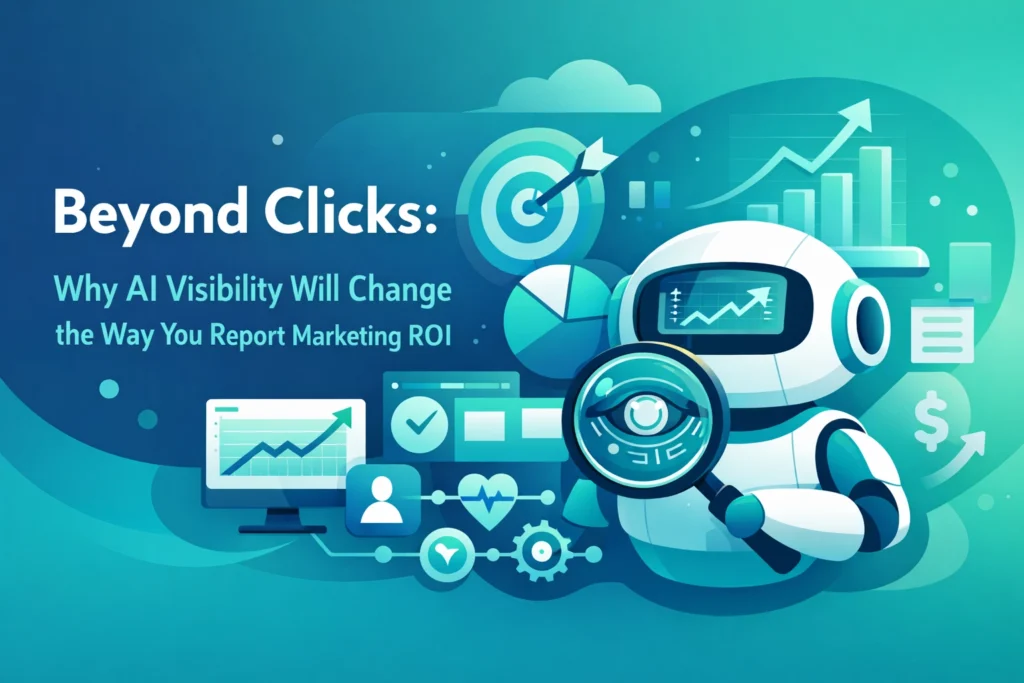
It’s time to move beyond clicks. Here is why AI visibility metrics and ModelScore™ are the new gold standards for reporting marketing ROI.
The Death of the Click-Only Strategy
Traditional SEO and PPC are based on a "library" model. A user searches for a book, Google gives them a list of books, and the user clicks one to read it.
AI search is different. It’s an "assistant" model. The user asks a question, and the assistant reads all the books for them and summarizes the answer. Research shows that AI-powered search results can lead to a significant drop in traditional web traffic because the "need to click" is removed for informational queries.
If your reporting only tracks traffic, your value as a marketing leader will appear to be shrinking, even if your brand influence is actually growing. To prove ROI in 2026 and beyond, you need to measure AI Visibility.

Caption: A visualization showing the shift from traditional search engine results pages (SERPs) to AI-generated answers.
Why Traditional Attribution is Breaking
Traditional attribution models (Last-Click, First-Click, or Linear) rely on a browser cookie or a tracking pixel to follow a user from a search engine to your landing page.
AI assistants break this chain. When an LLM (Large Language Model) mentions your brand:
- There is no cookie: The interaction happens on the AI's server, not your website.
- There is no referral string: Unless the user clicks a specific citation link (which only happens in a fraction of cases), you have no idea the AI even mentioned you.
- The "Mindshare" is invisible: A user might be recommended your product by Claude, then three days later type your URL directly into their browser. Your analytics will credit "Direct Traffic," hiding the fact that your AI visibility strategy was the actual driver.
To solve this, we need a new way to quantify brand authority within the "brains" of these AI models.
Introducing AI Visibility Metrics: The New Standard
To report true marketing ROI today, you need to track three specific areas that traditional tools like GA4 or SEMRush simply cannot see.
1. AI Share of Voice (SoV)
In the old world, you tracked which keywords you ranked for on page one. In the AI world, you track how often an AI assistant includes your brand in its response for a given category. If a user asks for "top-rated CRM software," what percentage of the time does your brand appear in the list? This is your AI Share of Voice.
2. AI Citations
Citations are the new backlinks. When an AI like Perplexity or Google AI Overview provides a source for its claim, that is a high-value citation. Tracking these allows you to see which pieces of your content are actually being "ingested" and trusted by the models.
3. ModelScore™
At Citemetrix, we realized that marketers needed a single, defensible metric to show the board. We created ModelScore™.
ModelScore™ is a proprietary metric that measures your brand's overall health across the AI ecosystem. It isn't just a vanity number; it’s a weighted calculation based on your citation frequency, brand demand, authority, and technical readiness (like your llms.txt implementation).
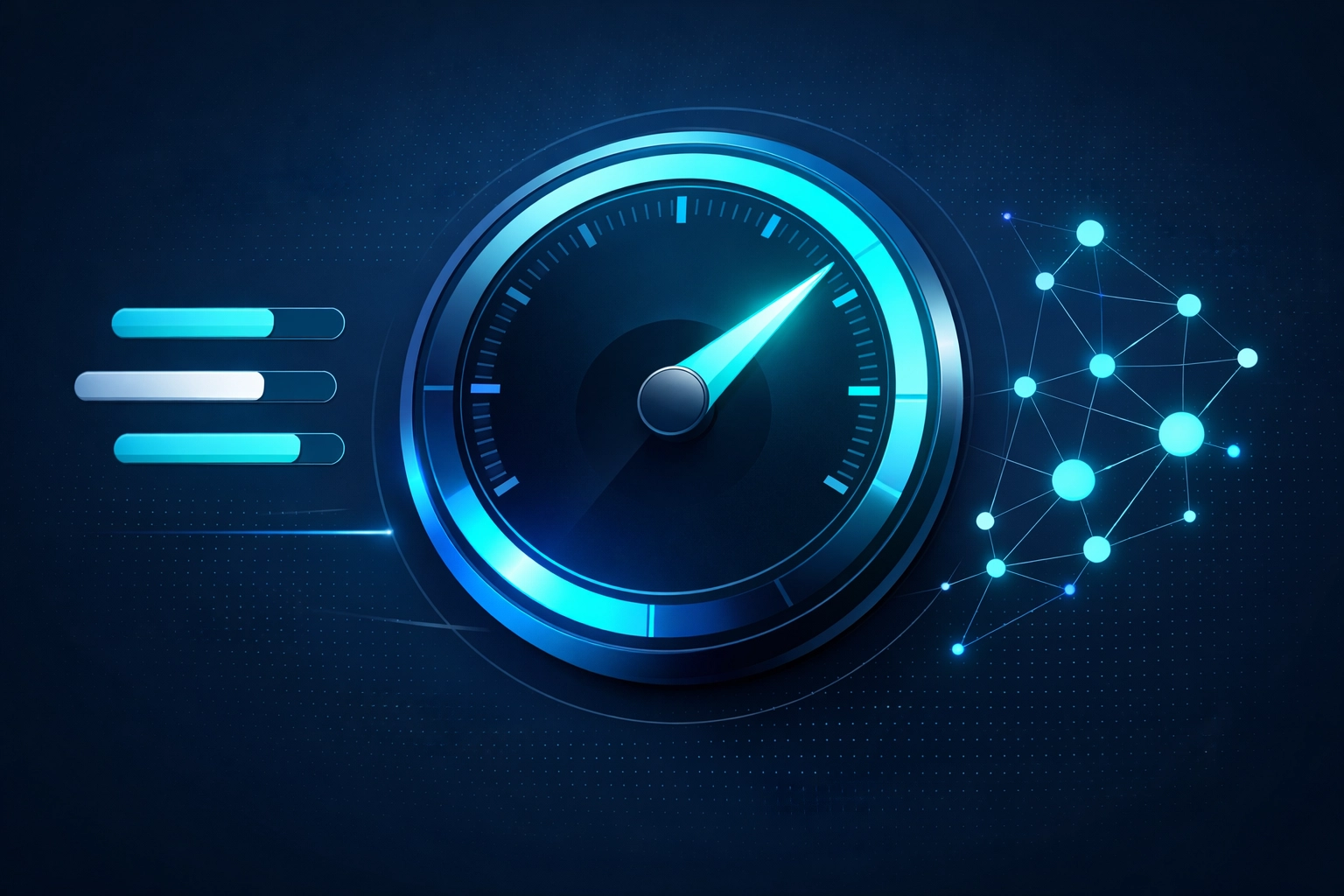
Caption: A screenshot of the Citemetrix dashboard displaying a ModelScore™ breakdown.
What is ModelScore™?
If you want to explain marketing ROI to a CEO, you need a metric that speaks their language. ModelScore™ acts like a "Credit Score" for your brand’s AI presence. It breaks down into four key pillars:
- Citation Strength: How often are AI models actually linking to your site as a source of truth?
- Brand Sentiment: Is the AI recommending you, or is it mentioning you in a neutral or negative context?
- Technical Accessibility: Can AI crawlers effectively "read" and "chunk" your data?
- Competitive Gap: How do you stack up against your primary competitors in the same AI prompts?
By tracking your ModelScore™ over time, you can show a direct correlation between content updates and increased AI "trust." This is much more valuable than a fluctuating ranking on a keyword that might not even generate clicks anymore.
From Citations to Conversions: The ROI Bridge
You might be wondering: "Citations are great, but how do I pay the bills with them?"
The transition to AI visibility doesn't mean we ignore revenue. It means we change how we attribute it. Here is how you connect AI visibility to business outcomes:
- Correlate Visibility with Direct Traffic: As your ModelScore™ increases, you will almost always see a rise in "Direct" and "Branded Search" traffic. This is the "AI Halo Effect."
- Measure AI Referral Conversion Rate: For the clicks that do come from AI (e.g., from a Perplexity citation), track their conversion rate separately. We often find that AI-referred leads are more qualified because the AI has already "vetted" the solution for them before they clicked.
- Shortened Sales Cycles: When a prospect has already been "sold" on your brand by an AI assistant they trust, the friction in the sales process decreases.
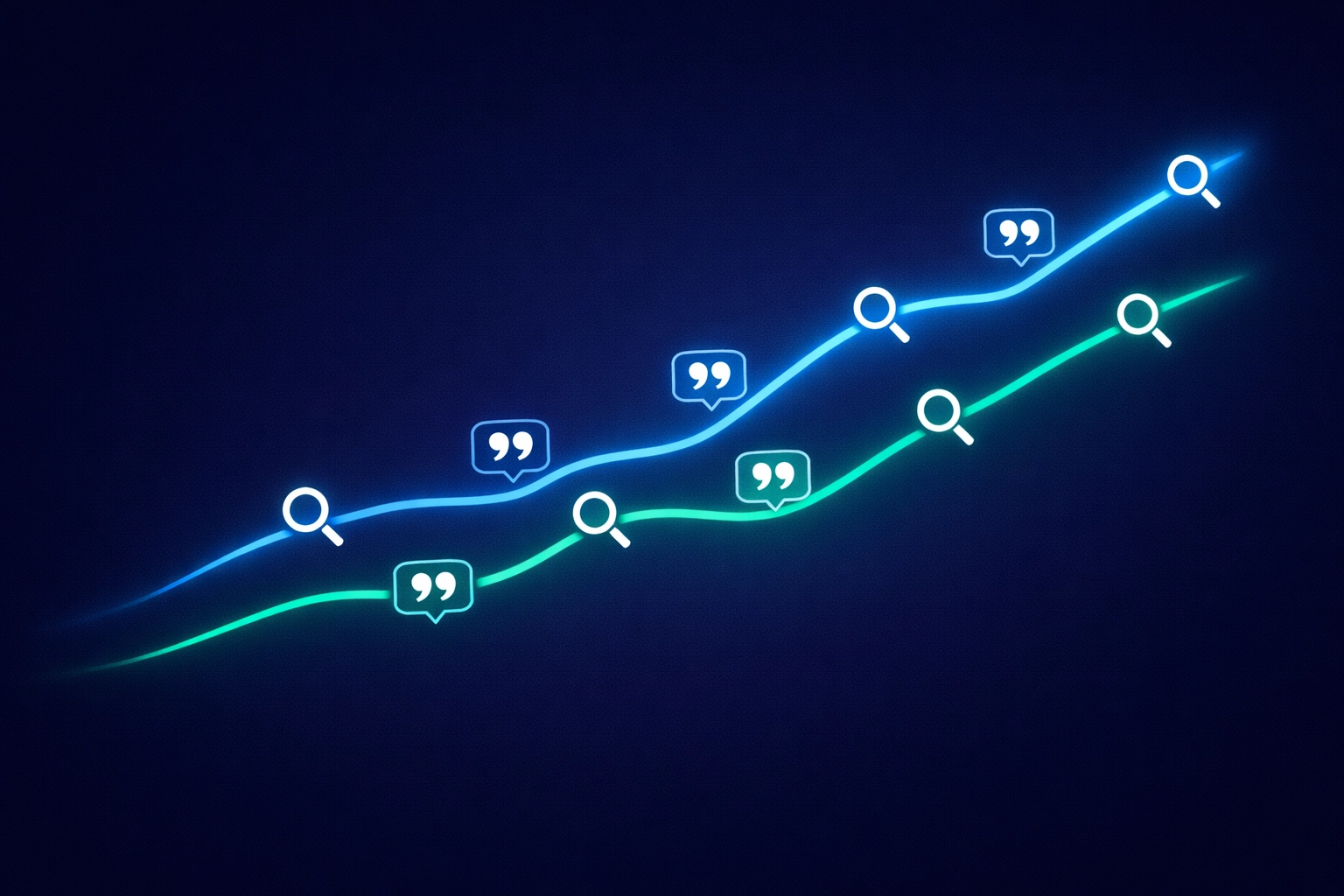
Caption: Data visualization showing the correlation between increased AI citations and branded search volume.
How to Report AI Impact to the C-Suite
When you sit down for your quarterly marketing review, your slides should look different than they did two years ago. Instead of just showing a graph of organic sessions, try this framework:
- The Visibility Gap: Show the board how many potential customers are using AI to find solutions in your category.
- Our AI Share of Voice: Use Citemetrix data to show, "Out of 1,000 prompts about [Category], our brand was recommended 40% of the time. Our top competitor was recommended 15%."
- The ModelScore™ Trend: "Our ModelScore™ has grown from 65 to 82 this quarter, following our technical AI optimizations. This indicates we are becoming a 'primary source' for Google and OpenAI."
- The Efficiency Metric: Compare your cost per AI mention to your traditional CPC. You’ll often find that being a cited authority is far more cost-effective in the long run than bidding on expensive keywords.
The Simple Path Forward
The transition to AI-first marketing doesn't have to be complicated. You don't need to scrap your entire strategy; you just need to change your lens.
The companies that will win the next decade are the ones that stop chasing the "blue link" and start building brand authority that AI models can't ignore.
If you are still reporting ROI based on 2019 metrics, you are leaving a massive blind spot in your strategy. It’s time to see what the AI actually thinks of you.
Ready to see your brand through the eyes of AI?
See what AI says about your brand → citemetrix.com
Join the beta (free) and get your ModelScore™ today → citemetrix.com/beta

Caption: A professional reporting template showing AI visibility metrics integrated with traditional KPIs.
Summary Checklist for CMOs:
- Audit your "Zero-Click" presence: Use tools like Citemetrix to see your current Share of Voice.
- Update your KPIs: Move from "Traffic" to "Citations and ModelScore™."
- Optimize for Crawlers: Ensure your technical setup (llms.txt, schema) allows AI to find you.
- Report the "AI Halo Effect": Connect AI mentions to increases in direct brand searches.
Marketing ROI isn't disappearing: it's just evolving. Don't let your reporting stay in the past while your customers move into the future.
For more guides on navigating the AI shift, check out our User Guide or Book a Demo to see how we can help you lead the change.