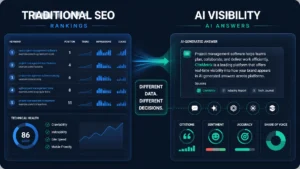
Traditional SEO sentiment tools were built for a world dominated by blue links and keyword rankings. They tracked what people searched on Google, monitored media mentions across news sites, and analyzed social media chatter. But today's buyers have changed how they discover products and services. When a prospective customer asks ChatGPT or Perplexity, "What is the best enterprise analytics platform for SaaS?" or "Compare Brand X and Brand Y," they don't get a list of links to click through. They receive an instant, synthesized recommendation written by an AI.
If your brand appears in that AI-generated response, how is it characterized? Is it praised as the industry leader, listed as a secondary option, or plagued by inaccuracies and negative framing?
Effective ai brand monitoring has become an absolute necessity for SEO professionals, digital marketing directors, and brand managers. Without it, you are flying blind in the channels where your highest-intent buyers are making purchasing decisions. In this step-by-step guide, we will walk through how to systematically track, measure, and improve your brand sentiment across ChatGPT and Perplexity using CiteMetrix.
Step 1: Define Your AI Brand Monitoring Objectives
Before running prompts or setting up automated tracking, you need to establish what "good sentiment" looks like for your brand in generative search engines. Unlike traditional web search, where ranking #1 is the primary goal, AI search evaluates your brand across multiple qualitative and quantitative dimensions:
- Presence: Does your brand appear at all when users query your core category?
- Sentiment Tone: Is the AI's framing positive, neutral, cautious, or outright negative?
- Recommendation Strength: Is your brand actively endorsed, merely listed in passing, or cited as a cautionary example?
- Competitive Standing: Are competitors framed as superior, equal, or inferior to your offerings?
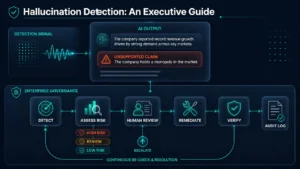
- Accuracy & Hallucinations: Are there factual errors, outdated pricing details, or risk-laden statements associated with your name?
Defining these parameters early ensures that your tracking yields actionable data rather than vanity metrics.
Step 2: Build Your Reusable AI Prompt Library
To monitor brand sentiment accurately, you cannot rely on random ad-hoc searches. You need a structured, reusable library of 15 to 25 queries that mirror how real buyers prompt AI assistants.
Organize your prompt library into four core intent categories:
- Branded Prompts: Direct questions about your company, products, and leadership.
- "What is [Brand] and what are its primary use cases?"
- "Is [Brand] a reliable choice for enterprise compliance?"
- Category Prompts: High-intent generic queries where you want to be recommended.
- "Best AI visibility analytics tools for mid-market SaaS companies."
- "Top platforms for tracking ChatGPT citations."
- Comparison Prompts: Head-to-head evaluations against your top competitors.
- "[Brand] vs [Competitor] for SEO professionals, which is better and why?"
- Alternative Prompts: Queries looking for substitutes or alternatives to your tool.
- "Best alternatives to [Brand] for small marketing agencies."
Keeping these prompts organized in a centralized tracker, or configuring them directly inside your CiteMetrix Citation Scans docs, allows you to maintain consistency across weekly and monthly scans.
Step 3: Set Up Automated Tracking Across ChatGPT and Perplexity

Manually opening ChatGPT and Perplexity in your personal browser to check brand sentiment is flawed. Personalization, login history, and session bias can skew the model's responses. Furthermore, doing this manually across dozens of prompts and multiple LLM engines quickly becomes unsustainable for busy marketing teams.
To master ai brand monitoring at scale, you need automated tracking that queries models under neutral conditions. Here is how to configure your tracking workflow:
- Isolate Engines: Recognize that ChatGPT and Perplexity operate differently. ChatGPT relies heavily on deep training consensus, while Perplexity pulls live web citations and search index results. Never conflate their outputs.
- Establish a Cadence: Run your full prompt library on a monthly schedule, with a weekly pulse-check on your top 5 to 10 high-value category and comparison queries.
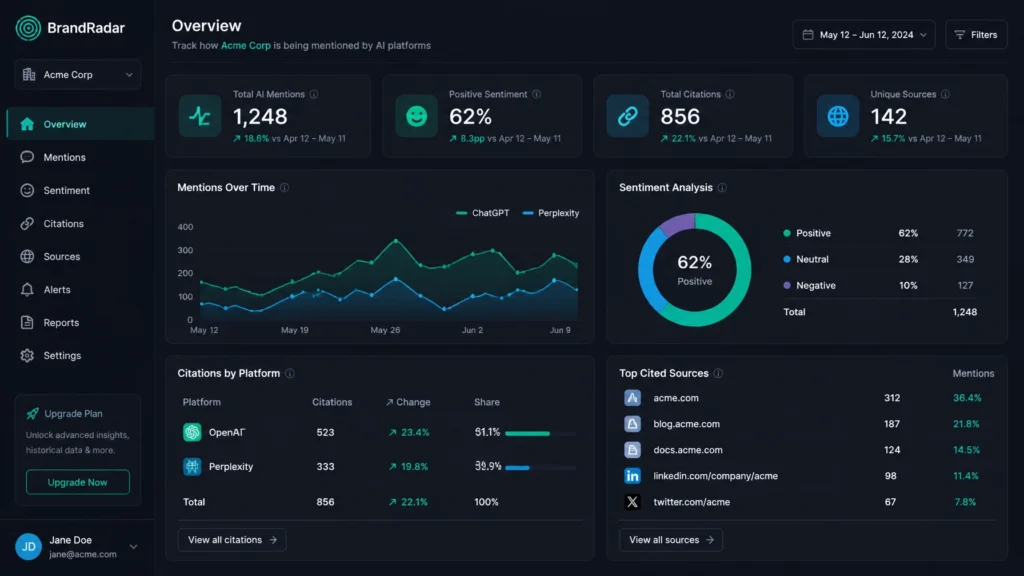
- Capture Raw Outputs: Ensure your monitoring setup logs the full response text, the specific model version used, and, in the case of Perplexity, the exact source domains cited in the answer.
Step 4: Log, Score, and Analyze Sentiment Metrics

Once your scans run, you need a standardized scoring system to quantify how AI platforms perceive your brand. Without scores, it is difficult to report progress to executive leadership or your CMO.
For each response generated by ChatGPT and Perplexity, record structured data points:
- Appearance Status: Did the brand appear (Yes/No) and what position did it occupy in any generated lists?
- Sentiment Classification: Tag each mention using a clear scale (e.g., Strongly Positive, Positive, Neutral, Negative, Strongly Negative).
- Net Sentiment Score (NSS): Calculate a composite score to track your brand's trajectory over time. Many marketing teams use formulas that weigh endorsements and neutral mentions against negative citations and hallucinations.
- Citation Domain Analysis (Perplexity): Review which third-party websites Perplexity relies on when forming its opinion of you. Are they your own blog posts, neutral review aggregators, or critical competitor write-ups?
By evaluating these metrics through CiteMetrix, you can instantly spot whether a recent product update, PR announcement, or content campaign successfully shifted AI perception.
Step 5: Translate AI Sentiment Insights Into Action

Gathering data is only half the battle. The true value of ai brand monitoring lies in how you use those insights to optimize your digital footprint. When your sentiment scores dip or competitors outrank you in AI responses, deploy these strategic corrections:
- Fill Content Gaps: If Perplexity or ChatGPT fails to recommend you for a key category prompt, review the sources they do cite. Publish comprehensive, data-rich guides, independent benchmarks, and updated feature documentation that AI crawlers can easily parse.
- Address Hallucinations Proactively: If AI models repeat outdated pricing or incorrect feature limitations, publish clear clarification pages on your site and ensure your technical readiness (such as clean schema markup and accessible robots.txt files) allows crawlers to ingest accurate facts.
- Engage with Third-Party Ecosystems: Because Perplexity and other LLMs heavily weight trusted review sites, industry publications, and community forums, align your PR and partner marketing efforts with the domains that heavily influence AI training data and search indexes.
For more advanced tactics on optimizing your digital presence, explore additional guides on the CiteMetrix Blog.
Conclusion: Start Monitoring Your AI Reputation Today
As search continues its rapid evolution toward generative AI assistants, brand reputation is no longer defined solely by traditional SEO rankings or social media buzz. How ChatGPT, Perplexity, Claude, and Gemini speak about your brand directly dictates your future pipeline and market authority.
By defining your objectives, building a targeted prompt library, automating your scans, and scoring sentiment systematically, you can take control of your narrative in the AI era.
Don't wait until your competitors dominate every AI-generated recommendation. See what AI says about your brand → citemetrix.com