Let’s be real for a second: if you’re still checking your "Blue Link" rankings on page one of Google and calling it a day, you’re essentially trying to navigate a Tesla using a paper map from 1994.
It’s February 2026. The world of search didn't just change; it completely flipped. People aren't just typing "best project management software" into a search bar and clicking the third result. They’re asking ChatGPT, "Which project management tool integrates best with Slack for a 20-person creative agency?" or telling Perplexity to "Compare CiteMetrix and its competitors based on recent user reviews."
If your brand isn’t in that generated answer, you don’t exist to that user.
Traditional SEO tools like Ahrefs or Semrush are great for what they were built for, tracking keywords and backlinks. But they are fundamentally blind to what’s happening inside the "black box" of Large Language Models (LLMs).
This is where AI visibility tracking comes in. If you want to know why your traffic is dipping despite your "rankings" staying the same, or why your competitors are suddenly winning deals you didn't even know were on the table, you need to understand this new landscape.
What is AI Visibility Tracking, Anyway?
In the simplest terms, AI visibility tracking is the process of monitoring how often, how accurately, and how favorably your brand is mentioned across AI platforms like ChatGPT, Claude, Gemini, and Perplexity.
While traditional SEO focuses on rankings (where you sit on a list), AI visibility focuses on citations and presence (whether you are part of the conversation).
An AI visibility tracking tool acts as a "secret shopper" for your brand. It sends thousands of prompts to different LLMs to see if they recommend you, how they describe your features, and whether they’re accidentally telling potential customers that your product doesn't do something it actually does.
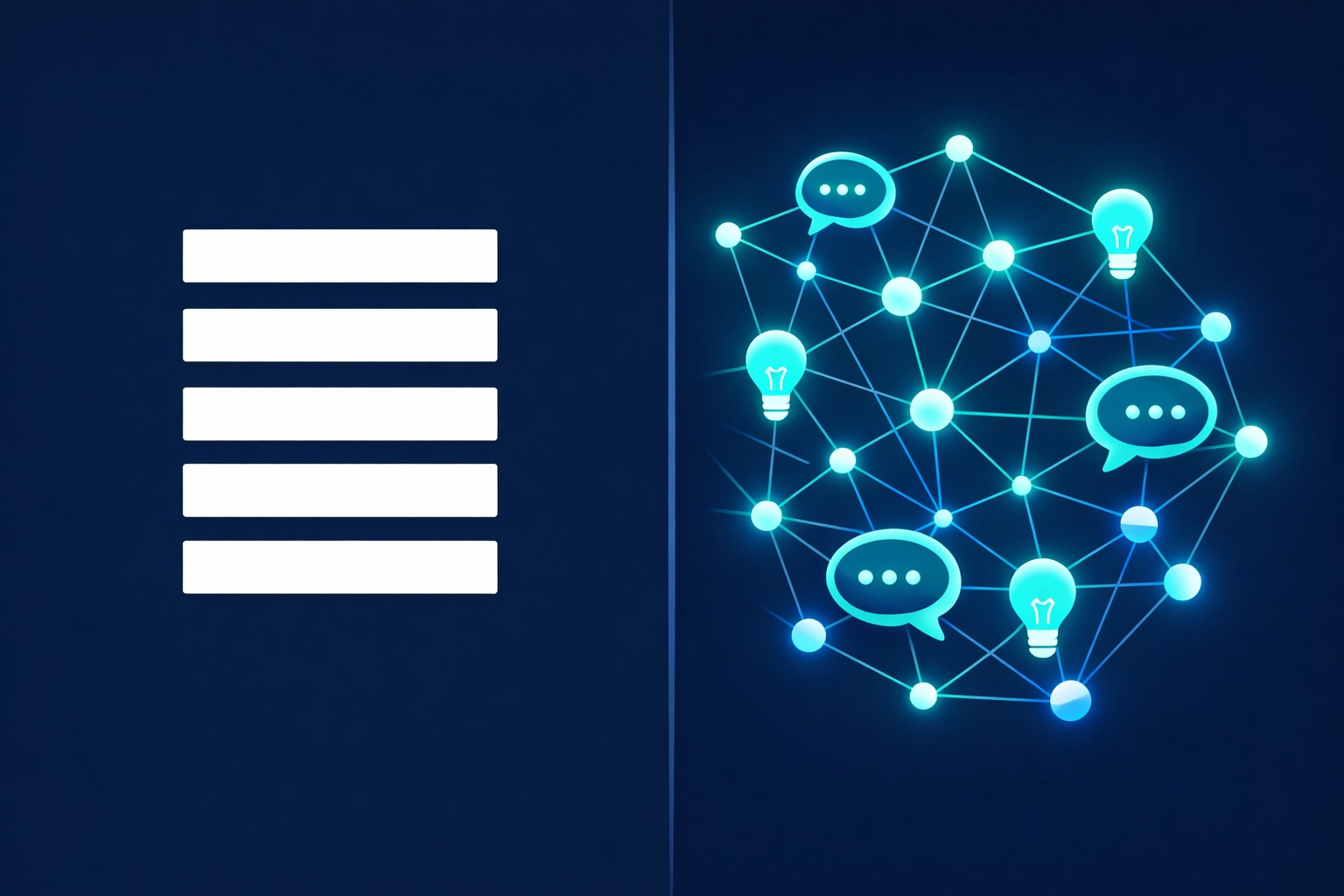
Visual: A minimalist comparison chart showing "Traditional SEO" (Linear list of links) vs. "AI Visibility" (A network of conversational citations).
How It Works: Under the Hood
You might be wondering: “Can’t I just ask ChatGPT myself?”
Sure, you could. But that’s like trying to track your global SEO rankings by manually Googling yourself from your laptop in New York. You’re getting a tiny, biased slice of the pie.
Professional AI visibility tools like CiteMetrix work through a sophisticated process of crawling and prompting:
- Massive Prompting: The tool simulates thousands of different user queries, from "bottom of the funnel" buying questions to high-level informational searches.
- LLM Interaction: It interacts with the APIs of all major models (OpenAI, Anthropic, Google, Meta, etc.) to see how each one responds.
- Data Extraction: It "reads" the generated text to identify if your brand was mentioned, if a link to your site was provided, and what the overall "sentiment" of the recommendation was.
- Scoring: All of this data is distilled into a single metric, at CiteMetrix, we call this your ModelScore™.
This isn't just about keywords. It’s about understanding the "latent space" where these AI models live.
AI Visibility vs. Traditional SEO: The Great Divide
The biggest mistake marketers make in 2026 is assuming that a #1 ranking on Google automatically equals a top recommendation in ChatGPT.
It doesn't.
In fact, our data shows that nearly 40% of the brands recommended by AI platforms don't even appear on the first page of traditional search results for those same queries. Why? Because AI models value different things than the Google algorithm of 2020.
| Feature | Traditional SEO | AI Visibility (GEO) |
|---|---|---|
| Primary Metric | Keyword Rank (1-100) | Citation Share & ModelScore™ |
| User Input | Short Keywords | Natural Language Prompts |
| The "Goal" | The Click | The Mention / Recommendation |
| Content Focus | H1s, Meta Tags, Backlinks | Authority, Context, and LLM-readability |
| Result Type | List of URLs | Synthesized Answer |
Traditional SEO is about winning a beauty contest judged by a robot that likes headers and links. AI visibility is about winning a debate judged by a robot that has read the entire internet and is trying to summarize it for a friend.
Why 2026 is the Critical Year
If you’d asked about this in 2023, it was a "wait and see" situation. In 2024, it was an experiment. By 2025, it was a trend.
In 2026, it is survival.
We’ve reached the tipping point where "Zero-Click Searches" (searches where the user gets the answer directly on the result page without clicking a link) have become the majority. Between Google’s AI Overviews and the rise of dedicated AI search engines like Perplexity, the "referral traffic" tap is being squeezed.
If you aren't tracking your AI search visibility, you are effectively flying a plane with half the instruments blacked out. You might see your "rankings" are fine, but your revenue is dropping because the AI is recommending your competitor in the summary box above your #1 link.
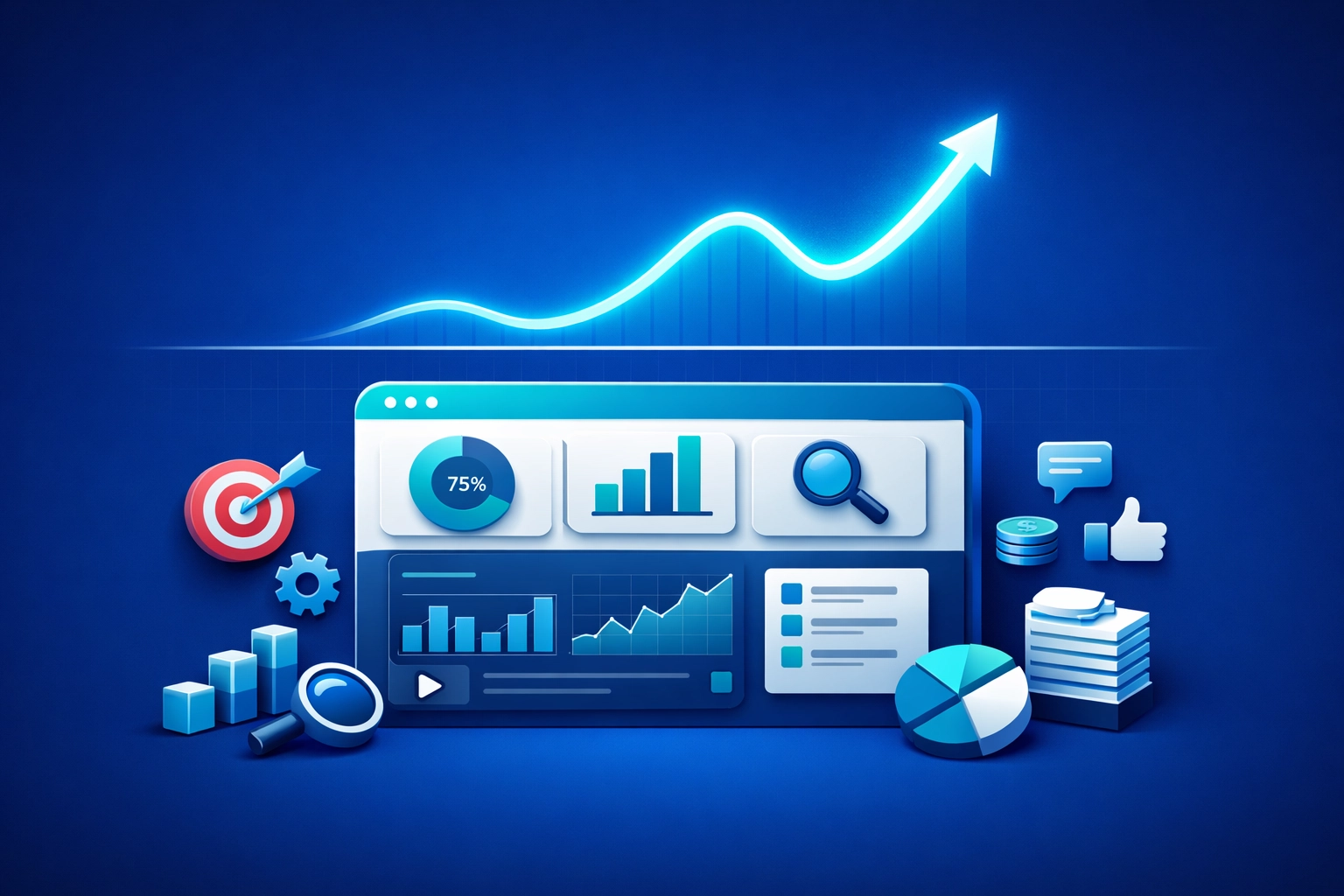
Visual: A minimalist dashboard screenshot from CiteMetrix showing a "ModelScore" trending upward while traditional "Keyword Rankings" remain flat.
The Benefits of Tracking (And the Risk of Staying Blind)
Why should you care? Beyond just "staying relevant," there are three massive business reasons to start tracking your AI visibility today:
1. Brand Protection (The Hallucination Problem)
AI models hallucinate. We've seen cases where a leading SaaS company was being described by Gemini as "no longer in business" simply because of a poorly phrased press release from three years ago. If you aren't tracking this, how would you even know? AI visibility tools catch these errors so you can fix your source content and "retrain" the models’ understanding of your brand.
2. Traffic Recovery
When you see your citation share drop on a specific model (say, GPT-5), you can look at who replaced you. By analyzing the content the AI is citing instead of yours, you can adjust your content strategy to win that spot back. This is the new "SEO Audit."
3. The Competitive Edge
Most of your competitors are still obsessing over their "Domain Authority." Meanwhile, you can be optimizing for "Model Authority." By getting ahead of the curve, you establish your brand as the "default" recommendation in your niche before the AI models' training data hardens.
How to Get Started
You don't need a PhD in Machine Learning to fix your AI visibility. You just need the right data.
The first step is seeing where you stand. Most brands are shocked to realize their "AI Share of Voice" is significantly lower than their traditional market share.
Ready to see what the AI is actually saying about you?
- See what AI says about your brand → citemetrix.com
- Join the beta (free) → citemetrix.com/beta
- Get your ModelScore → citemetrix.com/dashboard
The "Blue Link" era was fun while it lasted. But the future of search is conversational, synthesized, and AI-driven. Don't be the brand that gets left in the archives.
Stop guessing. Start tracking.

Visual: A dark-mode graphic of a radar scanning for brand mentions across various AI icons (ChatGPT, Claude, Gemini), with CiteMetrix at the center providing the "Clear Vision" point.
Want to dive deeper into the technical side? Check out our User Guide or explore more topics on our blog.