By February 2026, the secret is officially out: If your brand isn’t being cited by LLMs (Large Language Models), you’re essentially invisible to a massive chunk of the market.
Traditional SEO tools are great for tracking blue links, but they’re blind to the “Answer Engine” era. This has sparked a gold rush for AI visibility tracking software. But as with any new tech category, the market is currently a mix of high-end enterprise platforms, scrappy startups, and “AI wrappers” that don’t do much more than a basic Google search.
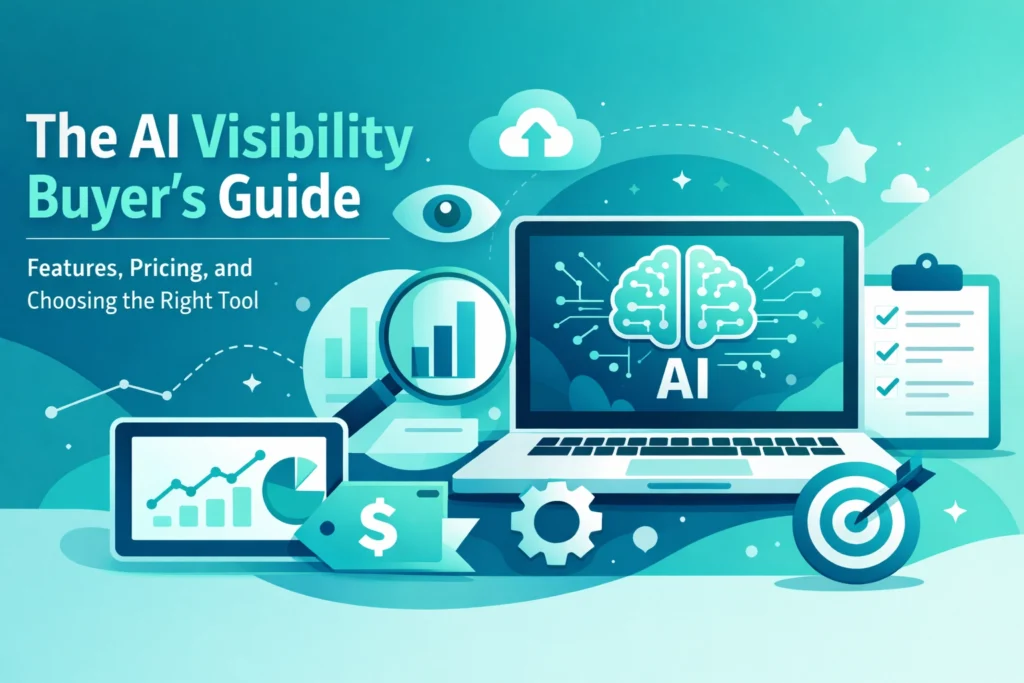
If you’re looking to invest in your brand’s AI reputation, you need to know what features actually move the needle and what’s just fluff. This guide breaks down the features, the costs, and the “why” behind choosing a specialist tool like Citemetrix.
The Non-Negotiable Features of AI Visibility Tracking
When shopping for an AI visibility tool, don’t get distracted by flashy dashboards. You need data that leads to action. Here are the four pillars of a professional-grade tool:
1. Real-Time Citation Tracking
It’s one thing to know that ChatGPT knows who you are. It’s another to know that it’s actively citing your blog posts as a source. Citation tracking monitors when Perplexity, Claude, or Gemini pulls your specific data to answer a user’s prompt. Without this, you’re just guessing why your traffic is fluctuating.
2. ModelScore™ (The Citemetrix Standard)
At Citemetrix, we developed ModelScore™ to give you a single, holistic metric. It’s not just “Share of Voice.” It’s a combination of citation frequency, brand authority within the LLM’s training data, and technical accessibility. If a tool just gives you a percentage of mentions without context, it’s not giving you the full picture.
3. Sentiment & Context Analysis
AI can be a hallucinating mess. Sometimes it mentions your brand in a list of “Companies to Avoid” or gets your pricing entirely wrong. You need a tool that doesn’t just count mentions but analyzes the sentiment. Is the AI recommending you as a “budget option” or a “premium leader”? This is the focus group you never hired.
4. Competitor Monitoring
In the age of Generative Engine Optimization (GEO), visibility is a zero-sum game. If ChatGPT recommends three competitors and ignores you, you’ve lost the lead. Your tool should allow you to “side-car” your competitors to see which sources the AI prefers over yours.

The Pricing Reality: From Free to Enterprise
AI visibility tracking isn’t “cheap” in the traditional sense because running thousands of prompts across multiple LLMs costs a significant amount in API credits and compute power. Here is how the market currently shakes out:
- The Budget Tier ($20 – $90/mo): These are usually “lite” versions of tools. They might track 5-10 keywords across one or two models (like ChatGPT and Google AI Overviews). Great for solo creators, but usually lacks historical data or deep sentiment analysis.
- The Growth/Mid-Tier ($120 – $300/mo): This is where most serious marketing teams live. You get multi-engine support (Claude, Perplexity, Gemini, etc.) and competitive benchmarking. Citemetrix Professional fits here, offering deep dives into prompt-level data.
- The Enterprise Tier ($400 – $1,000+/mo): For global brands managing hundreds of products. This includes API access, custom integrations, and high-frequency scanning.
The ‘Cheapest vs. Best’ Debate
I get asked all the time: “Can’t I just use a $20 tool?”
Here’s the deal: In the world of AI data, you get what you pay for. Cheap tools often rely on old, cached data or “scraped” results from third parties. They aren’t actually querying the LLMs in real-time. If you’re making million-dollar marketing decisions based on $20 data, you’re taking a massive risk. Accuracy in AI visibility requires high-quality, direct LLM calls, which aren’t cheap. The “best” tool is the one that gives you data you can actually trust to build a Generative Engine Optimization strategy.
Specialist Tools vs. Platform Add-ons
You might notice that big SEO players like Ahrefs or Semrush are starting to add “AI features.” While these are great for a quick look, there’s a major reason to use a specialist tool like Citemetrix: Focus.
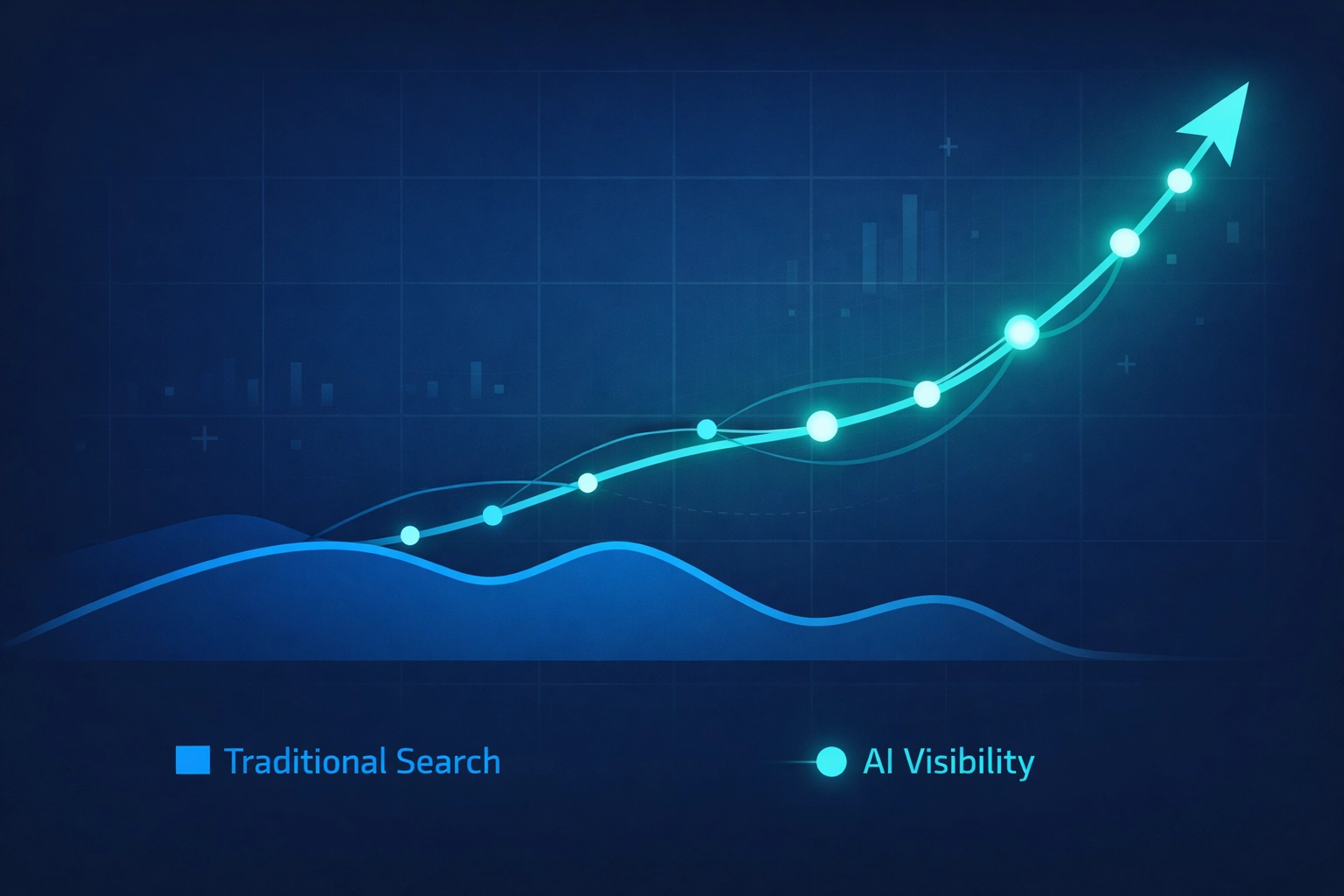
Legacy SEO tools were built for the “Blue Link” era. Their databases are structured around keywords and backlinks. AI visibility is built around prompts and citations.
A specialist tool understands that a prompt is the new search query. We don’t just tack on an “AI tab”: we build our entire architecture around how LLMs ingest, process, and output brand information. If you want to know how to fix a citation error in Claude 3.5, a generalist SEO tool isn’t going to have that level of granular detail.
Small Business vs. Enterprise Needs
The way you use an AI visibility tool depends entirely on your scale:
- Small Businesses: Your focus should be on Brand Reputation. You need to know if the AI is telling people your store is closed or your product is out of stock. A Starter plan is usually enough to monitor your core brand prompts and ensure you aren’t being hallucinated out of existence.
- Agencies & Enterprises: You need Scale and Attribution. You need to manage multiple domains and provide reports to stakeholders that prove your content strategy is actually resulting in AI citations. You need to see the “why” behind the “what.”
The Missing Link: Integration with GSC and GA4
Data is useless in a vacuum. The biggest mistake you can make when buying an AI visibility tool is choosing one that doesn’t talk to your existing analytics.
You need to know: When my ModelScore™ went up by 15%, did my referral traffic from Perplexity also go up?
At Citemetrix, we prioritize integrations with Google Search Console and GA4. This allows you to bridge the gap between “AI Sentiment” and “Actual Dollars.” If you can see that a specific citation in a Google AI Overview led to 500 high-intent clicks, you know exactly where to double down on your content efforts.
.Choosing Your Path
So, how do you decide? Ask yourself these three questions:
- How much of my traffic is “at risk” from AI search? (Hint: If you’re in SaaS, finance, or health, it’s a lot).
- Do I need to track competitors or just myself?
- Do I want to just “see” the data, or do I want a roadmap to fix it?
If you’re ready to stop guessing and start measuring, the best place to begin is by seeing where you currently stand. Don’t wait until your organic traffic drops to zero to realize you’ve been “de-indexed” by the world’s most popular AI models.
Ready to see what the AI world thinks about you?
Join the Citemetrix Beta for free and get your first ModelScore™ today. Or, if you’re ready to scale your agency’s AI offerings, check out our Agency Plan.
The search landscape has changed. Make sure you have the right eyes to see it.